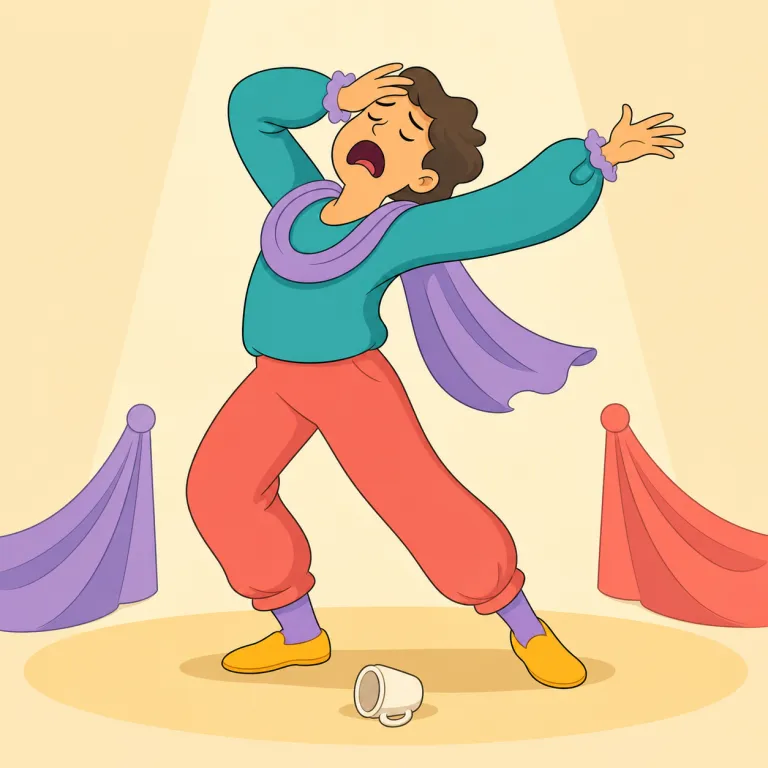
芝居がかって
解説 Definition
感情や反応を、舞台演技のように大げさで不自然な態度によって表すさま。
In an exaggerated, theatrical way that makes an emotion or reaction seem unnatural. It often suggests deliberate self-dramatization and is usually critical.
覚え方のコツ Memory Tip
histrionic「芝居がかった」+ -ally「〜な様子で」と捉えます。語根がラテン語の「俳優」に結び付くため、舞台上で胸を押さえ、大げさにため息をつく姿を思い浮かべると定着しやすいでしょう。dramatically よりも、わざとらしさや過剰な自己演出を批判する響きが強い語です。
Connect histrionic, meaning “overly theatrical,” with the adverb ending -ally. Picture someone clutching their chest and sighing like an actor onstage; unlike dramatically, this word often criticizes behavior as artificial or excessive.
例文
He sighed histrionically and threw himself onto the sofa.
彼は大げさにため息をつき、ソファに身を投げ出した。
She reacted histrionically to what was only a minor delay.
彼女はほんの少し遅れただけなのに、芝居がかった反応をした。
The actor clutched his chest and collapsed histrionically.
その俳優は胸をつかみ、芝居がかった様子で倒れ込んだ。
histrionically の類義語・関連語
派生語
histrionically の語源・成り立ち Etymology
histrionic「芝居がかった」に副詞接尾辞 -ally が付いた語です。histrionic は後期ラテン語 histrionicus「俳優の」に由来し、その語根 histrio は「俳優」を意味します。そこから大げさな演技的態度を表すようになりました。
It combines histrionic with the adverb suffix -ally. Histrionic comes from Late Latin histrionicus, “of an actor,” whose root histrio means “actor.”
同じレベルの語彙をもっと
外部辞書で調べる
この英単語をクイズで覚えよう