histrionic
histrionic は英検1級・TOEIC 990・TOEFL 100・IELTS 7.5レベルの英単語で、「演技的な」という意味があります。発音記号は /ˌhɪstriˈɑnɪk/ です。
演技的な
解説 Definition
感情・言葉・行動が、演技のように芝居がかって大げさなさま。自然さに欠け、注意を引こうとする表現を否定的に評することが多い。
Histrionic means very dramatic in a way that seems exaggerated or more like acting than natural behavior. It is often used to describe speech, emotions, or actions that are intended to attract attention. The word usually has a negative meaning.
使い方 Usage
使い分け Common distinctions
- dramatic や theatrical に近いが、感情表現が過剰で自然さに欠けるという否定的な意味合いが強い。 It is close to dramatic or theatrical, but more strongly suggests that emotional expression is excessive and unnatural.
覚え方のコツ Memory Tip
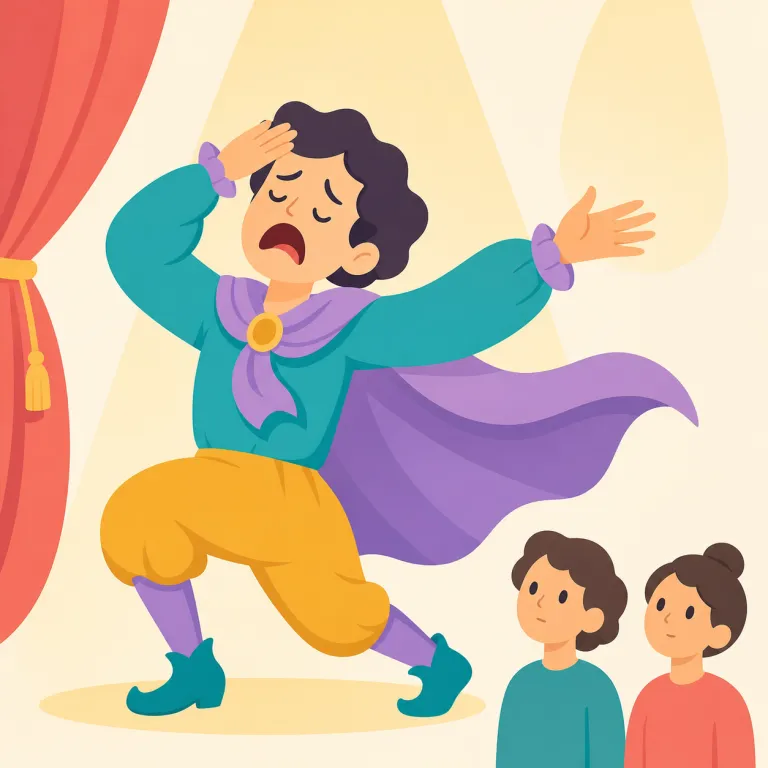
舞台で感情をオーバーに演じる姿を思い浮かべ、「芝居がかった大げささ」と結びつける。つづりが似た history や historic と混同しない。
Picture someone acting out emotions too dramatically on a stage, and connect the word with exaggerated, theatrical behavior. Do not confuse its spelling with history or historic.
例文
Her histrionic performance was entertaining but lacked authenticity.
彼女の芝居がかった演技は楽しめたが、真実味に欠けていた。
He responded to the criticism with histrionic gestures and complaints.
彼は批判に対し、芝居がかった大げさな身ぶりを交えながら文句を言って応じた。
histrionic の類義語・関連語
histrionic の語源・成り立ち Etymology
histrionicはラテン語histrio「役者」に形容詞語尾-icが付いた語です。原義は文字どおり「役者のような」で、感情過多・芝居がかった意味になったと見ると腑に落ちます。histrionicsやhistrionismが同じ根です。
Histrionic comes from Latin histrio, meaning "actor," with the adjective ending -ic. At first it meant simply "like an actor" or "theatrical." From there it developed the negative sense of being overly dramatic or showy in emotion. Related words include histrionics and histrionism.
同じレベルの語彙をもっと
英検1級の一覧へ →外部辞書で調べる
この英単語をクイズで覚えよう