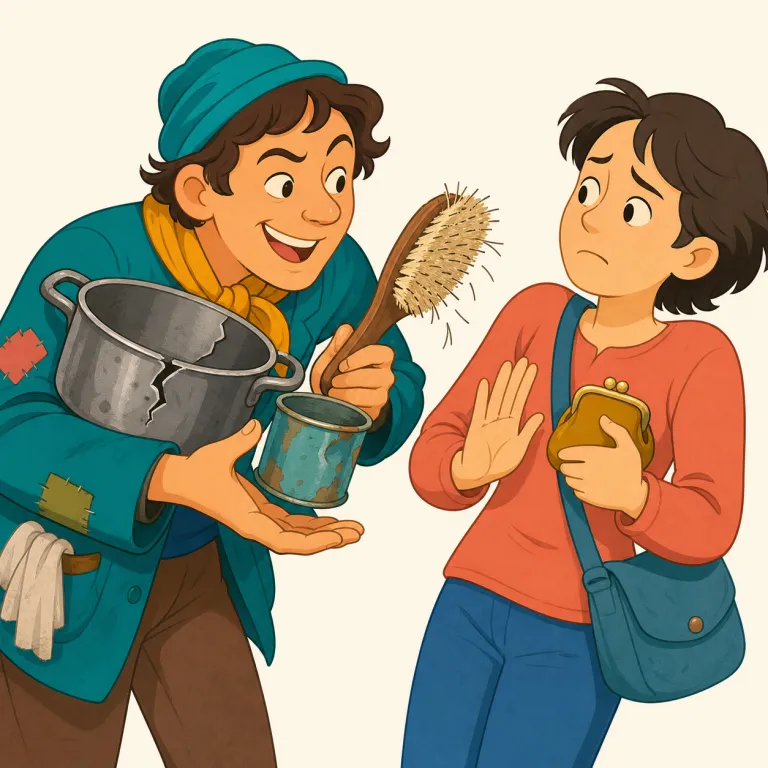
押し売り屋・悪徳商人
解説 Definition
押しの強い売り込みをする商人や、不誠実な販売者を指します。大げさな宣伝や話術で買わせようとする否定的な語ですが、必ず法律上の詐欺を行う人とは限りません。
A huckster is a person who sells things in a loud, aggressive, or dishonest way. The word is often used for someone who pushes low-quality goods or tries to trick people in business. It usually has a negative meaning.
覚え方のコツ Memory Tip
まず「普通に物を売る人」ではなく、話術で押し切って売りつける人物像と結びつけると定着します。語尾の -ster は trickster, gangster, youngster など「そういうタイプの人」を表す形でよく出るので、人を指す名詞だと見抜けます。huckster は seller や vendor よりずっと否定的で、品質の怪しい品を大げさに宣伝して買わせる感じです。hawker や peddler は文脈次第で中立ですが、huckster は「うさんくさい」「不誠実」の色が強い語。街頭や怪しい通販でまくしたてる商人の場面を固定すると忘れにくいです。
Notice the ending `-ster`, as in `trickster` or `gangster`: it often means a certain kind of person. So `huckster` is not just any seller, but a shady, pushy seller type. Picture someone talking very fast and praising a cheap product too much.
例文
The huckster sold fake remedies to gullible customers.
その詐欺商人は騙されやすい顧客に偽物の治療薬を売りました。
The huckster's promises were too good to be true.
その押し売り屋の約束は、あまりにうますぎて本当とは思えませんでした。
Law enforcement arrested the huckster for fraud.
警察はその悪徳商人を詐欺容疑で逮捕しました。
huckster の類義語・関連語
紛らわしい語
huckster の語源・成り立ち Etymology
中低ドイツ語 hökster(行商人)に由来し、höken(売る)+ 行為者接尾辞 -ster から成る。英語の hawker(行商人)と同根。もとは小売り商人の意味だったが、しつこく売りつける者→悪徳商人へと意味が悪化した。
`Huckster` comes from Middle Low German `hökster`, a word for a petty trader or peddler, from a verb meaning to sell. It is related to English `hawker`, which has a similar trading sense. In English, the meaning later became more negative, moving from an ordinary small seller to someone who pushes goods aggressively or dishonestly. That change reflects suspicion toward hard-selling street merchants.
外部辞書で調べる
この単語を英単語クイズで覚えよう