クラ
解説 Definition
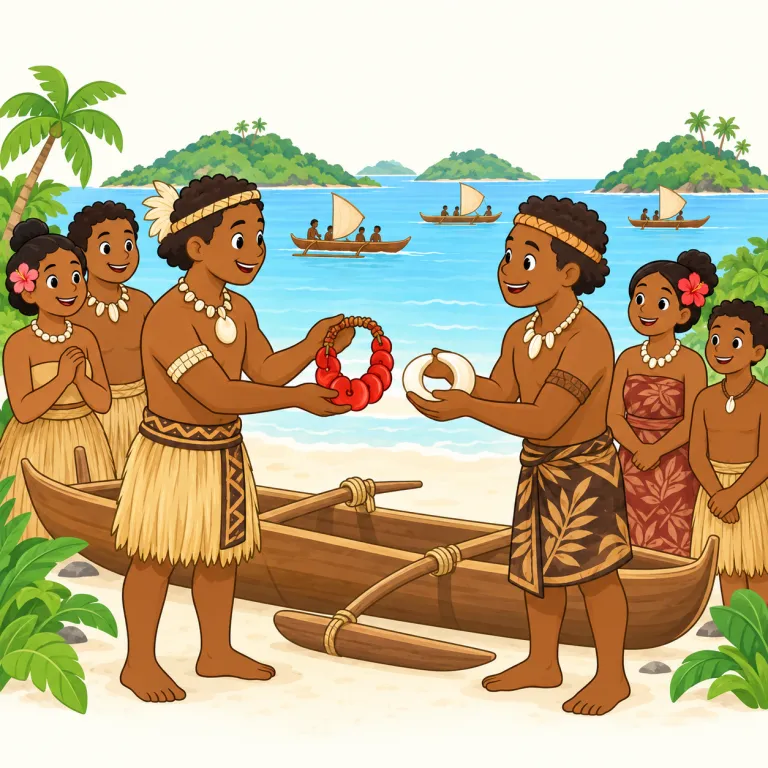
パプアニューギニアのマッシム地域の島々で行われる儀礼的な贈与交換。決まった相手との間で貴重品を循環させ、社会的な関係や信頼、威信を築く。
Kula is a ceremonial system of reciprocal gift exchange practiced among island communities in the Massim region of Papua New Guinea. Valuables circulate between established partners, helping create and maintain social relationships, trust, and prestige rather than functioning as ordinary commercial payment.
使い方 Usage
使い分け Common distinctions
- 通常の商業的な支払いとは区別されます。また、サンスクリット語の kula「家族・氏族」とは別語源です。 Distinguish kula from ordinary commercial payment. It also has a different origin from Sanskrit kula, meaning family or clan.
覚え方のコツ Memory Tip
島々の交換相手が輪になり、儀礼的な贈り物を次へ渡していく姿を思い浮かべます。「物が巡る輪」と「人々の関係」を一緒に覚えるのが手掛かりです。
Picture a ring of exchange partners on different islands passing ceremonial gifts onward. Remember both the circulation of valuables and the relationships it maintains.
例文
In the kula system, valuable items circulate between islands and communities.
クラの仕組みでは、貴重品が島々や共同体の間を循環します。
Anthropologists study the kula ring to understand reciprocal gift exchanges.
人類学者は相互的な贈与交換を理解するためにクラの交換圏を研究しています。
kula の類義語・関連語
類義語
派生語
kula の語源・成り立ち Etymology
人類学用語の kula は、パプアニューギニアのマッシム地方で行われる儀礼的交換体系の名称として、20世紀初頭の民族誌を通じて英語で広く知られるようになった。サンスクリット語 kula「家族・氏族」とは同綴りだが別語源である。
The anthropological term entered English through descriptions of the ceremonial exchange system practiced in the Massim region of Papua New Guinea and became widely known through early twentieth-century ethnographic writing. Its local Melanesian linguistic history is separate from Sanskrit kula, meaning “family,” “lineage,” or “clan.” The identical spelling therefore does not establish a shared origin between the exchange term and the South Asian word.
同じレベルの語彙をもっと
外部辞書で調べる
この英単語をクイズで覚えよう