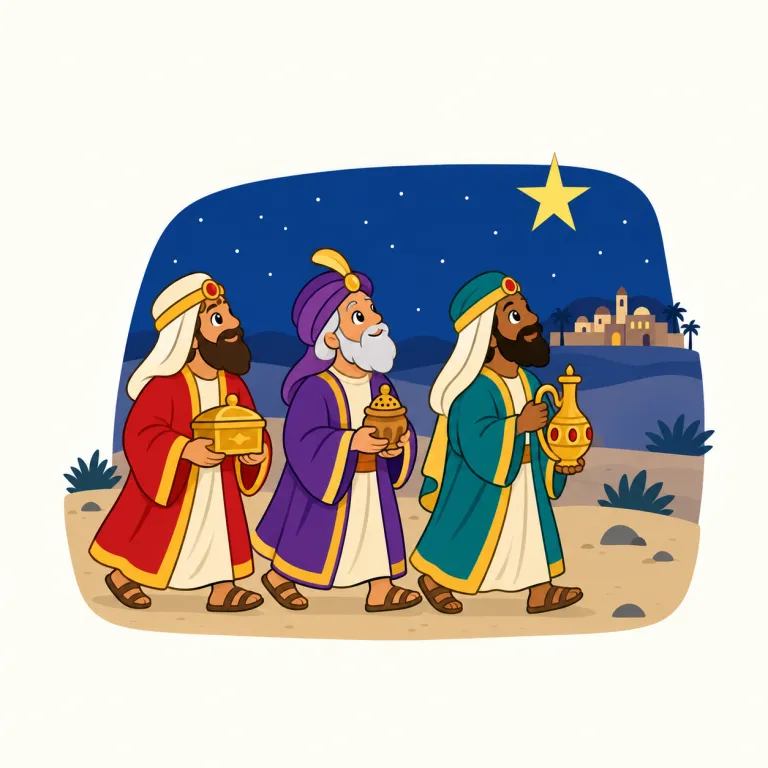
マギ(古代ペルシアの祭司・東方の博士たち)
解説 Definition
magi は magus の複数形で、古代ペルシアの祭司階級や占星術に通じた賢者を指します。特に聖書では、イエスの誕生時に東方から訪れた博士たちを表します。現代の一般的な手品師には magicians を用います。
Magi is the plural of magus, referring historically to members of an ancient Persian priestly class or to learned astrologers and wise men. It is especially used for the visitors from the East in the biblical account of Jesus’s birth and can archaically mean magicians.
覚え方のコツ Memory Tip
magi は magus の複数形で、古代ペルシアの祭司・占星術師や、聖書の「東方の博士たち」を表します。magic、magician と同じ歴史的な語群に属しますが、現代の舞台奇術師なら magicians が普通です。「古代の宗教的知識を持つ者たち」という場面を核に覚えましょう。
Remember magi as the plural of magus, not as the ordinary modern plural of magician. Picture learned figures from the ancient East serving as priests, interpreting the stars, or bringing gifts in the biblical Nativity story. This connects the word with historical wisdom, religion, and astrology. Magic and magician come from the same historical word family, but their modern meanings have developed differently: a stage performer is a magician, whereas the Magi are traditionally the wise visitors from the East. The singular–plural pair magus–magi follows a Latin pattern also seen in some learned words.
例文
The Magi followed the star to Bethlehem.
東方の博士たちは星を追ってベツレヘムへ向かいました。
Ancient writers described the magi as a Persian priestly class.
古代の著述家たちは、マギをペルシアの祭司階級として記述しました。
magi の類義語・関連語
magi の語源・成り立ち Etymology
古代ペルシア語の聖職者「maguš」に由来し、ギリシャ語・ラテン語を経て英語に入りました。本来はゾロアスター教の祭司を指し、「知恵者・占星術師」へ転じ、東方の三博士にも用いられます。「magic」や「magician」と同語根であり、古代ペルシャの宗教的知恵が源であることがわかります。
Magi is the Latin plural of magus. Latin borrowed the word from Greek magos, which referred to a member of a Persian priestly class and ultimately came from Old Persian maguš. Its meanings expanded from Persian priests to astrologers, wise men, and practitioners of magic. The same historical source gave English magic and magician. In Christian tradition, the plural Magi became a title for the visitors from the East described in the Gospel of Matthew.
同じレベルの語彙をもっと
外部辞書で調べる
この英単語をクイズで覚えよう