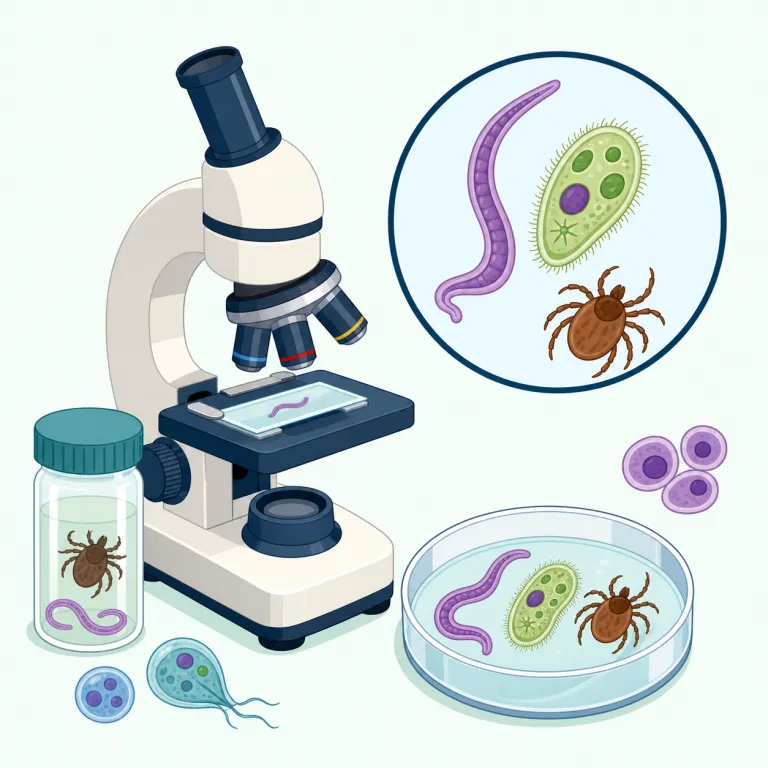
寄生虫学
解説 Definition
寄生虫を研究する生物学の一分野。寄生虫とその宿主の関係、生命サイクル、および疾病について学ぶ。
Parasitology is the scientific study of parasites and how they live, grow, and affect other living things. It is often used in biology, medicine, and veterinary science. The field also looks at the relationship between parasites and their hosts.
覚え方のコツ Memory Tip
まず語尾の -logy は biology, geology と同じ「〜学」なので、parasitology は「parasite を扱う学問」と切れればかなり覚えやすいです。中心は parasite(寄生生物・寄生虫)で、parasitic は「寄生性の」という形容詞。つまり parasite → parasitic → parasitology と語族でまとめるのがコツ。医学・生物の文脈で parasite infection, host-parasite relationship, life cycle などと一緒に出やすく、「寄生虫そのもの」ではなく、それを研究する分野名だと区別すると定着します。
Use the ending `-logy` as your anchor: it means "the study of," like in `biology` or `geology`. Then break the word into `parasite + ology` and connect it with the word family `parasite`, `parasitic`, and `parasitology`. If you remember the family, the long form feels much easier.
例文
Parasitology is crucial for understanding tropical diseases.
寄生虫学は熱帯病を理解するために重要である。
She specializes in parasitology, focusing on malaria transmission.
彼女は寄生虫学を専門とし、マラリアの伝播に焦点を当てている。
Advances in parasitology have led to better treatments for infections.
寄生虫学の進歩により、感染症の治療法が改善された。
parasitology の類義語・関連語
紛らわしい語
parasitology の語源・成り立ち Etymology
parasitology は parasite と -logy から成り、語源はギリシャ語 para「そばに」+ sitos「食べ物」+ logos「学問」です。「人の食卓に寄って食べる者」が「居候・寄生者」を経て寄生生物を指すようになり、関連語に parasite、parasitic があります。
Parasitology is made from parasite and -logy, "the study of." Parasite comes from Greek para, "beside," and sitos, "food," and originally referred to someone who ate at another person's table. The meaning later shifted to a dependent living thing, and related words include parasite and parasitic.
同じレベルの語彙をもっと
外部辞書で調べる
この英単語をクイズで覚えよう