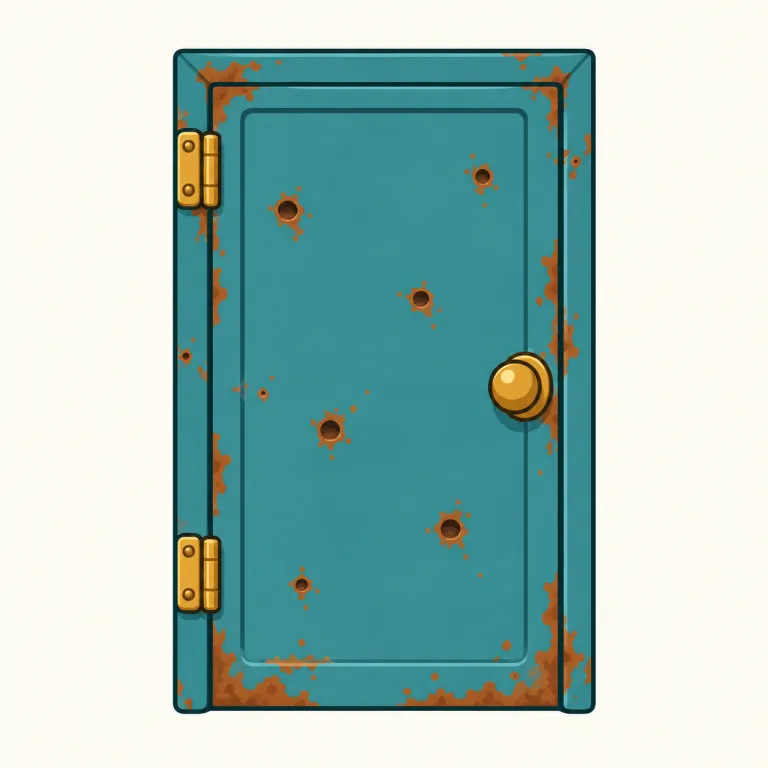
穴があいた
解説 Definition
pitted は pit(穴をあける、くぼませる)の過去形・過去分詞からできた形容詞です。表面に小さな穴やくぼみがたくさんある状態を表します。
Having many small holes, dents, or hollow marks on a surface, especially as a result of rust, wear, weather, or damage. It commonly describes metal, roads, stone, or skin.
覚え方のコツ Memory Tip
原形 pit「表面に穴・くぼみを作る」に、子音を重ねて過去・過去分詞の -ed を付けた形です。ここでは形容詞として、金属・道路・石などがさびや摩耗で「小さなくぼみだらけの」状態を表します。pitted with rust のまとまりで覚えましょう。語末の -ed は /ɪd/ と発音します。
Connect pitted with the verb pit, meaning “to make small hollows in a surface.” Because pit ends in a stressed consonant sound, the spelling doubles the final t before -ed: pit becomes pitted, pronounced with an extra syllable, /ˈpɪtɪd/. Picture an old metal door covered with tiny dents caused by rust. Useful combinations include pitted with rust and a pitted surface. Unlike cracked, which suggests lines or splits, pitted emphasizes numerous small, rounded holes or depressions.
例文
The old metal door was pitted with rust.
古い金属のドアは、さびで穴だらけになっていました。
Rain left the soft road pitted and uneven.
雨のせいで柔らかい道は穴があき、でこぼこになりました。
She touched the pitted surface of the stone wall.
彼女は穴のあいた石壁の表面に触れました。
pitted の類義語・関連語
pitted の語源・成り立ち Etymology
古英語 pytt(穴・くぼみ)から派生した形容詞。ラテン語 puteus(井戸・穴)に遡る。表面にくぼみや穴がある状態を表す。関連語:pit, pitfall。果物の種を取る意味の pit は別語源(オランダ語)だが、穴のイメージが共通している。
Pitted is formed from the verb pit plus the past-participle ending -ed. The surface-related noun pit comes through Old English pytt, meaning a hole or hollow, ultimately associated with Latin puteus, “well” or “pit.” The adjective therefore literally describes something marked with pits. The fruit-related use of pit developed separately, though modern speakers readily connect both uses through the shared image of a hollow or removed center.
同じレベルの語彙をもっと
外部辞書で調べる
この英単語をクイズで覚えよう