対抗させる、競わせる
verb 動詞人やチームなどを相手と争う状況に置くことを表します。通常は pit A against B の形で「AをBと対決させる」といい、自ら競争するというより、二者を競わせる働きかけに焦点があります。
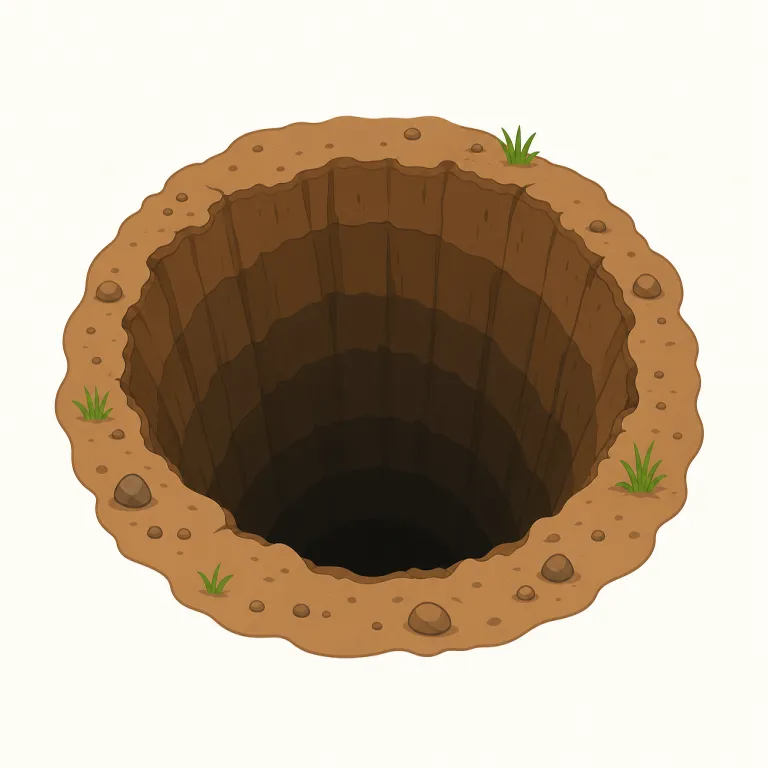
pit は英検2級レベルの英単語で、「穴」という意味があります。発音記号は /ˈpɪt/ です。
地面や表面に掘られたり開いたりした穴のこと。深くて狭い空間やくぼみを指し、建設などで基礎工事や排水に使われる。果物の中心部で種を守る硬い殻も「pit」と呼ばれる。
A pit is a deep hole in the ground or in a surface. It can be natural or made by people, and it is often used for things like mining, trapping, or waste. In some contexts, pit can also mean the hard seed inside certain fruits or a low area in a building such as an orchestra pit.
pit は hole より「深く、狭く、落ちたら厄介な穴」を核にすると定着しやすい。pitfall の pit を思い出すと、危険な穴の感覚が残る。さらに peach pit / cherry pit では「果物の中心の硬い核」に意味が広がるので、どちらも“内側にあるくぼみ・中心部”の発想で一つにまとめられる。a pit in the ground, an oil pit のように使え、単なる hole より暗く深い感じが出る語だと押さえると混同しにくい。
Think of `pit` as more than a simple `hole`: it feels deeper, narrower, and more dangerous. The word `pitfall` can help fix that image in your mind. It also appears in `peach pit` or `cherry pit`, so remember the idea of a deep center or hard inner part.
A dog digs a deep pit.
犬が深い穴を掘ります。
This pit is very deep.
この穴はとても深いです。
Do not fall in the pit.
その穴に落ちないでください。
文脈によって、次の意味でも使われます。
人やチームなどを相手と争う状況に置くことを表します。通常は pit A against B の形で「AをBと対決させる」といい、自ら競争するというより、二者を競わせる働きかけに焦点があります。
桃やサクランボなどの果実から、中心にある硬い種を取り除くことを表す主に米国英語の用法です。pit the cherries のように果物を目的語に取り、既存の名詞「果物の種」と区別されます。
自動車レースで、車両が給油、タイヤ交換、修理などを受けるコース脇の区画を指します。the pits や pit area の形でも使われ、単なる地面の穴ではなく競技施設の一部を意味します。
古英語 pytt ← ラテン語 puteus「井戸・穴」に由来。地面を掘った穴が原義で、鉱山の縦穴や果物の種(核=硬い中心部)の意味にも発展。関連語: pitfall(落とし穴)。ラテン語の「井戸」から英語では広く「くぼみ・穴」全般を指すようになった。
Pit comes from Old English pytt, which was borrowed from Latin puteus, meaning "well" or "shaft." The basic meaning was a hole dug in the ground. Later it widened to other kinds of hollow spaces, including mine shafts and even the hard center of a fruit, as in a peach pit.
この英単語をクイズで覚えよう