処理規則、動作論理
noun 名詞コンピューターや電子回路が入力を処理し、所定の結果を出すための規則や仕組みを指します。program logic や control logic のように使われ、人が議論で用いる推論ではなく、システムの動作を決める設計上の規則を表します。
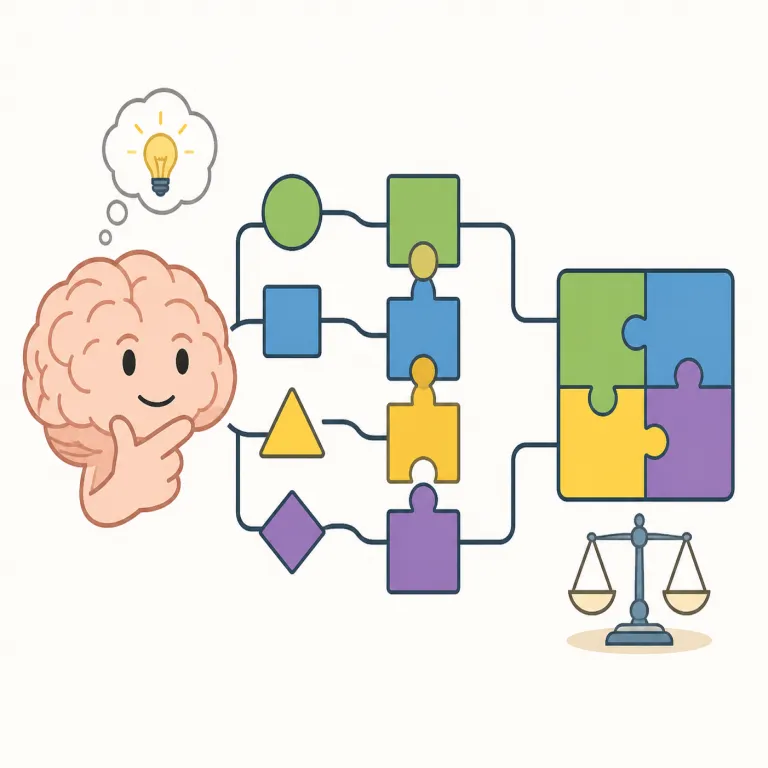
logic は英検2級・TOEIC 730・TOEFL 60・IELTS 5.5レベルの英単語で、「論理」という意味があります。発音記号は /ˈlɑːdʒɪk/ です。
logic は、物事を筋道立てて考えたり、結論を導いたりするための論理や推論の仕組みを指す名詞です。議論の正しさ、説明の一貫性、計画の筋の通り方などを述べるときに広く使われ、学問としての論理学を指すこともあります。
Logic is clear and reasonable thinking based on facts, ideas, or rules. It is used when explaining why something makes sense, especially in discussion, study, science, or problem-solving.
logic は「筋が通っているか」を見る語だと覚えると残りやすい。まず形の近い logical(論理的な)、illogical(非論理的な)とセットで押さえると核がぶれない。会話では the logic behind the plan, There’s no logic in that のように「説明・判断・計画の筋道」を言う場面で頻出。reason が個々の理由、logic は複数の理由をつないだ全体の筋道、という違いで整理すると使い分けやすい。
Learn logic with logical and illogical as a small word family. A reason can be one point, but logic is the full chain that connects points clearly. The phrase the logic behind it is a useful memory hook.
This logic is easy.
この論理は簡単です。
His logic is not right.
彼の論理は正しくありません。
Good logic helps us think.
よい論理は考える助けになります。
この語をはじめて出題された 41人 のうち 41人 が正解しました(100%)。
えいたんごクイズの回答から集計した独自データです。1人につき最初に出題されたときの1回だけを数えており、復習や2回目以降の回答、「わからない」と時間切れは含みません。 集計時点は 2026年9月19日 です。
文脈によって、次の意味でも使われます。
コンピューターや電子回路が入力を処理し、所定の結果を出すための規則や仕組みを指します。program logic や control logic のように使われ、人が議論で用いる推論ではなく、システムの動作を決める設計上の規則を表します。
logic はフランス語 logique、さらにラテン語 logica、ギリシャ語 logikē にさかのぼり、語根は logos「言葉・理性」。「言葉を筋道立てて考えること」が原像なので、理屈や論理の意味に自然につながる。関連語は dialogue、monologue。
Logic came through French logique and Latin logica, from Greek logike. Its root is logos, a Greek word meaning "word," "speech," or "reason." Because it was connected with reasoning through words, the meaning moved naturally toward ordered thinking and rational argument. Related English words with the same root include dialogue and monologue.
この英単語をクイズで覚えよう