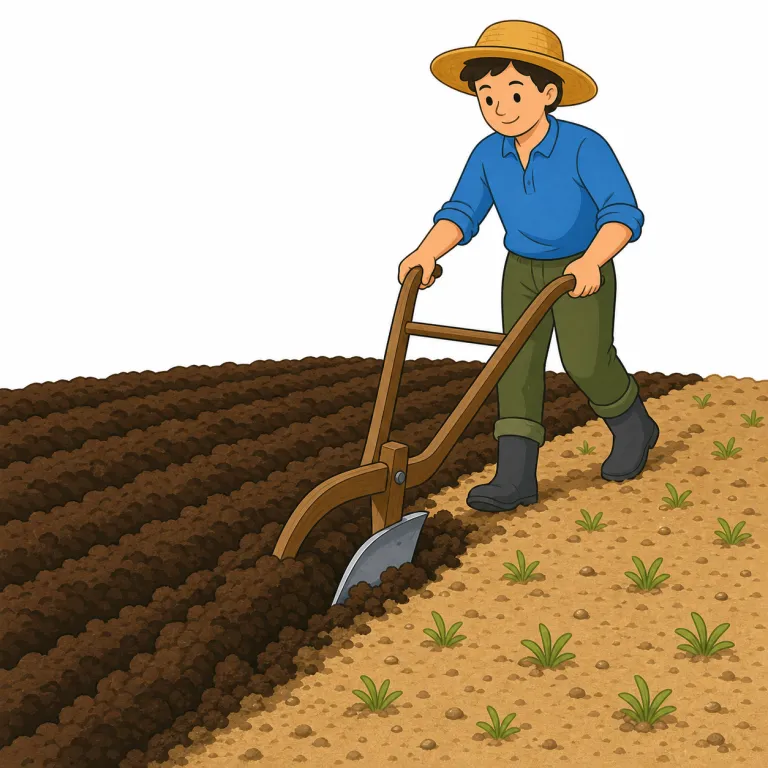
鋤、プラウ
noun 名詞土を切り起こして耕すための農具、またはトラクターに取り付ける同様の装置を指します。主に英国式の綴りで、米国英語では通常plowと綴ります。
ploughは、畑や田んぼの土を鋤(すき)で深く返す動作を指す動詞である。土を鋤やトラクターで切り開いて柔らかくし、水はけや通気性を改善する。種まきや田植えの前に行うことで、植物の根がよく張るようにする。
To plough means to turn over and break up soil in a field so crops can be grown. It is mainly used in farming and is often done with a machine or, traditionally, with animals. In British English, plough is the usual spelling.
plough は、dig が「掘る」、cultivate が「耕作する」全般だとすると、その中でも「鋤や機械で畑に筋を作りながら土を深く返す」かなり具体的な動き。plough a field の形で覚えると定着しやすい。soil, field, tractor と結びつけると使用場面が固定される。英国式つづりは plough、米国式は plow。発音は /plau/ で、-ough の見た目に引っぱられて別の読みをしないよう注意。
Think of plough as a farming word used with fields, soil, and tractors. A good collocation is "plough a field," which fixes the image in your mind. Also note the spelling difference: British English uses plough, while American English uses plow.
Every spring, the farmers plough their fields before planting rice.
毎春、農家は田植えの前に田んぼを耕す。
He helped plough the garden so they could grow vegetables.
彼は野菜が育つように庭を耕すのを手伝った。
The tractor can plough faster than the old wooden plough.
そのトラクターは古い木製の鋤よりも速く耕すことができる。
文脈によって、次の意味でも使われます。
土を切り起こして耕すための農具、またはトラクターに取り付ける同様の装置を指します。主に英国式の綴りで、米国英語では通常plowと綴ります。
plough は古英語 ploh/plog に由来するゲルマン系の古い語で、土を切って筋を入れる農具と動作そのものを指した。畑に一本ずつ線を刻む像が「耕す」の核心で、ploughshare や ploughman にも同じ土仕事の感覚が残る。
Plough is an old Germanic word that came into English from Old English ploh or plog. It first referred to the farm tool and the action of cutting lines into the earth. From that basic image of making furrows in soil, it developed into the general verb for working land. Related words include ploughman and ploughshare.
この英単語をクイズで覚えよう