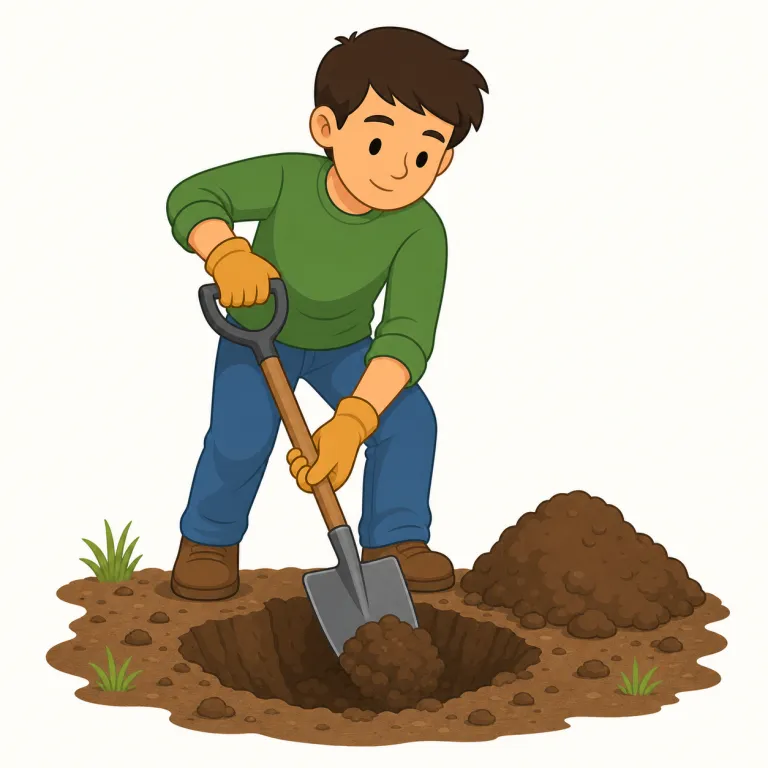
dig
dig は英検準2級レベルの英単語で、「掘る、気に入る、理解する」という意味があります。発音記号は /dɪɡ/ です。
意味一覧 (3件)
掘る
解説 Definition
土や地面を掘ること。また比喩的に、情報や問題を深く調査し、本質を探ることを意味します。
To dig means to make a hole in the ground or move earth with your hands, a tool, or a machine. It is commonly used for gardening, building, or finding something under the surface. The word can also suggest searching deeply for something.
覚え方のコツ Memory Tip
dig はまず「土を掘る」を核に置き、穴を下へ下へ進める動きとして覚えると、比喩の意味にも広がりやすいです。道具を表す語ではなく、ごく基本の動詞なので、garden を dig する、穴を dig するのように広く使えます。情報では dig into the issue で「問題を深掘りする」、dig up information で「情報を掘り起こす」。同じ「探す」でも look for が表面的、dig は中身を掘り返して本質に迫る感じ。なお a dig at ... は「皮肉」という別用法なので分けて覚えると混乱しません。
Keep the basic picture first: `dig` means going down into the ground. From that image, it is easy to remember uses like `dig into a problem` or `dig up information`. `Look for` is more surface-level, but `dig` feels deeper and more active.
例文
The children are digging a hole in the garden.
子どもたちは庭に穴を掘っています。
She digs into her research every morning.
彼女は毎朝研究に深く取り組みます。
We must dig into the data to find answers.
答えを見つけるためにデータを深く掘り下げなければなりません。
気に入る
(意味 2)解説 Definition
口語で、音楽・服・人の雰囲気などを「いいね」と感じて好むことを表す。ややくだけた言い方で、会話やレビュー調の文で使われやすい。単に好きというだけでなく、感覚的にハマる響きがある。
覚え方のコツ Memory Tip
dig の口語の「気に入る」は、「心にぐっと入ってくる、ノれる」と覚えると土を掘る意味と切り分けやすいです。I dig this song. は『この曲を掘る』ではなく、『この曲いいね、ハマる』というくだけた言い方。like より少し感覚的で、音楽・服・雰囲気などに対して使われやすいです。dig into the issue の「深掘りする」とは別に、会話調の I really dig ... で覚えると定着します。
例文
I really dig this song.
私はこの曲がすごく気に入っている。
She digs vintage clothes.
彼女は古着が好きだ。
If you dig spicy food, try this curry.
辛い物が好きなら、このカレーを試してみて。
理解する
(意味 3)解説 Definition
口語で、相手の言いたいことや状況の意味をつかむことを表す。説明や冗談に対して「わかった?」「話の筋をつかんだ?」とくだけて確認するときに使われる。理屈を細かく分析するより、要点を飲み込む響きがある。
覚え方のコツ Memory Tip
dig は「土を掘る」から比喩的に「中身をつかむ」へ広がった口語として覚えると、この意味に合います。Do you dig it? は「掘ってる?」ではなく、「話の芯まで届いた?=わかった?」というくだけた確認。understand よりラフで、理屈を説明できるかより、冗談や発言のポイントを飲み込んだかを聞く響きがあります。dig into the issue のような「深掘りする」とは近い比喩ですが、この行では調査ではなく、相手の意味をぱっとつかむ用法として分けて覚えると混乱しません。
例文
I don't dig what he means.
彼の言いたいことがよく理解できない。
Do you dig what I mean?
私の言いたいこと、わかる?
It took me a minute to dig the rules.
そのルールを理解するのに少し時間がかかった。
dig の類義語・関連語
dig の語源・成り立ち Etymology
dig は古英語 dīcian「溝を掘る」に由来し、名詞 dīc「溝・土手」と同根です。もともとは地面を切って溝を作る動作だったため、そこから広く「掘る」全般の意味になったと考えると覚えやすい語です。関連語に ditch, dike があります。
Dig comes from Old English dician, meaning "to dig a ditch," and it is related to dic, meaning "ditch" or "bank." At first it was about cutting into the ground to make a trench. From that more specific action, it widened to mean digging in general. Related words include ditch and dike.
同じレベルの英単語をもっと
英検準2級の一覧へ →外部辞書で調べる
この単語を英単語クイズで覚えよう