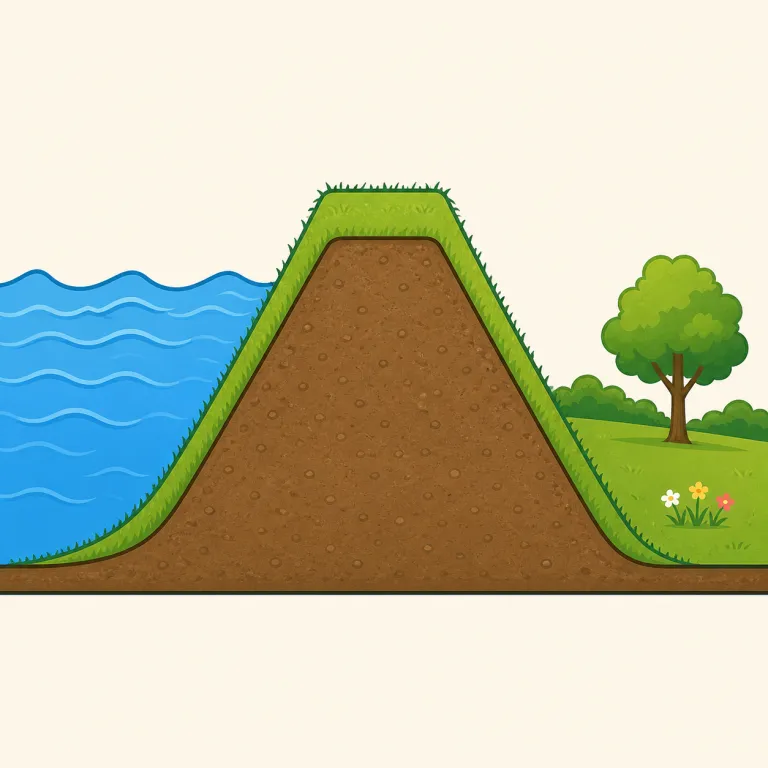
岩脈
noun 名詞地質学では、板状の岩体が既存の地層や岩石の割れ目を横切って入り込んだ「岩脈」を指す。多くはマグマが貫入して固まったもので、地質図や露頭の説明に使われ、堤防とは明確に異なる。
川や海の水が土地へ流れ込むのを防ぐため、岸沿いなどに築かれた構造物を指す。
A long structure built along a river, coast, or similar area to prevent water from flooding the land. It is usually a raised wall or bank rather than a water channel.
dike は、川や海の水が陸へ入り込まないように築く「堤防」です。水路そのものではなく、水をせき止めて町や農地を守る長い土壁・構造物を思い浮かべます。古くは掘った溝と、その土を盛った壁が一体だったため、ditch(溝)と関連づけて「掘る側が ditch、盛って防ぐ側が dike」と対にすると記憶に残ります。build a dike along the river、the dike protects the town from floods、a damaged dike が典型。dam や堰より、岸沿いに延びて浸水を防ぐ設備だと押さえると区別しやすいです。
Picture a long earth wall protecting a town or field from river or sea water. Connect it with ditch: historically, digging a ditch produced soil that could be piled up into the protective wall.
They built a dike along the river.
彼らは川沿いに堤防を築きました。
The dike protects the town from floods.
その堤防は町を洪水から守っています。
Heavy rain damaged the old dike.
大雨が古い堤防を損傷させました。
文脈によって、次の意味でも使われます。
地質学では、板状の岩体が既存の地層や岩石の割れ目を横切って入り込んだ「岩脈」を指す。多くはマグマが貫入して固まったもので、地質図や露頭の説明に使われ、堤防とは明確に異なる。
古英語「dīc」に由来し、「土を練り固める」印欧祖語語根「*dheigh-」に遡ります。溝を掘った土で壁を築く構造から、元々は「溝」と「土手」の両方を指しました。治水設備として定着し「堤防」の意味に特化したため、同語源の「ditch(溝)」と対になる形で残っています。
The word comes from Old English dīc and is traced to the reconstructed root *dheigh-, meaning "to form or build with earth." Because earth from a dug channel could form a bank, the earlier word referred to both a ditch and a raised barrier.
この英単語をクイズで覚えよう