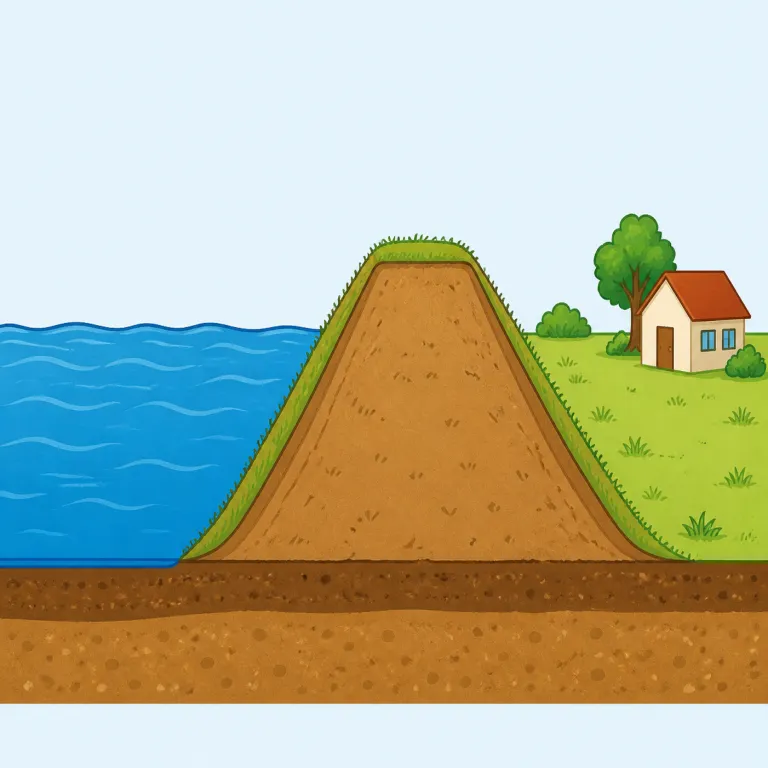
levee
levee は英検1級レベルの英単語で、「堤防」という意味があります。発音記号は /ˈlɛvi/ です。
堤防
解説 Definition
川や湖の水位が上がったときに、まわりの陸地に水が流れ込まないように築かれる土手で、堤防とも呼ばれます。通常は土やコンクリートを積み上げて構成され、洪水から町や田畑を守るために使われます。破損や決壊が起こらないように、定期的な点検と補強が必要です。
A levee is a wall or raised bank built to stop a river from flooding nearby land. The word is common in geography, farming, and flood control discussions.
覚え方のコツ Memory Tip
levee は「川の water level が上がったとき、それを食い止める壁」と場面ごと覚えると残りやすい語です。ニュースでは river levee, build/repair a levee, a levee breaks の形で出やすいです。dam が川そのものをせき止める「ダム」なのに対し、levee は水が外へあふれないよう岸に沿って作る堤防。embankment よりも洪水対策の文脈が強い、と押さえると混同しにくくなります。
Tie the word to `level`: a `levee` helps when the water level rises. Picture a long wall along a riverbank stopping floodwater from spreading out. This makes it easier to separate from a `dam`, which blocks the river itself.
例文
Engineers designed a new levee system to protect the city from flooding.
エンジニアは洪水から都市を保護するための新しい堤防システムを設計しました。
The levee broke during the storm, causing widespread flooding in the community.
嵐の間に堤防が決壊し、地域一帯に洪水が広がりました。
Strengthening the levees is essential for protecting low-lying areas from river overflow.
堤防を強化することは、低地を河川の氾濫から保護するために不可欠です。
levee の類義語・関連語
levee の語源・成り立ち Etymology
levee はフランス語 levée「持ち上げられたもの」からで、動詞 lever「持ち上げる」はラテン語 levare「軽くして上げる」に由来します。川岸を「高く持ち上げた土手」と考えると堤防の意味が腑に落ち、関連語は elevate、relieve です。
Levee comes from French levée, meaning "something raised," from lever "to raise." That verb goes back to Latin levare, "to lift" or "raise," also seen in words like elevate and relieve. The word was then used for an embankment because it is a raised bank built against water.
同じレベルの語彙をもっと
英検1級の一覧へ →外部辞書で調べる
この英単語をクイズで覚えよう