隔壁
解説 Definition
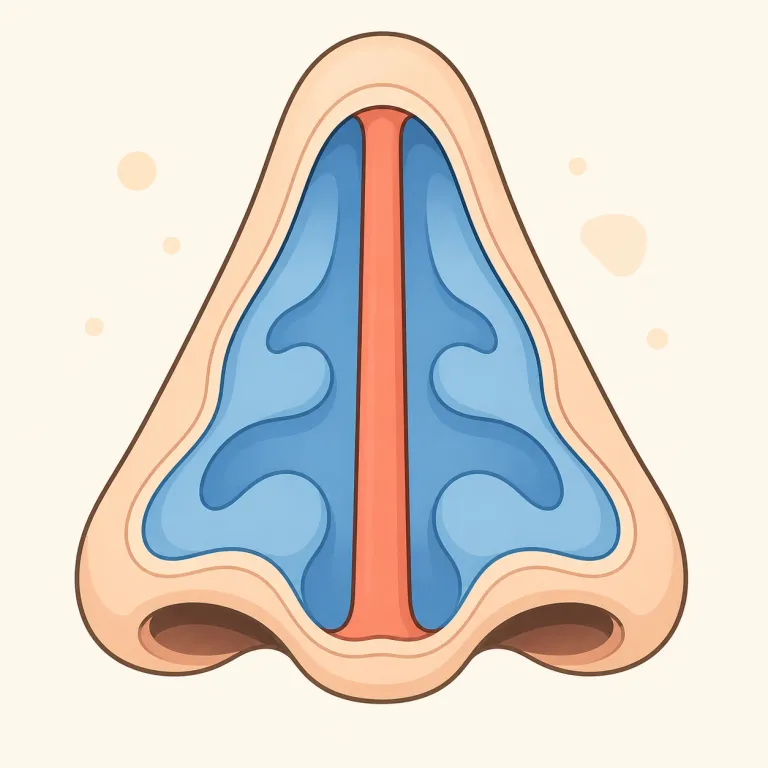
隔壁とは、身体内で二つの空間や構造を仕切る壁のようなものです。主に医学や解剖学の文脈で用いられ、鼻の中央を分ける軟骨や膜を指すことが多いです。心臓では左右の心房・心室を分ける働きもあります。
A septum is a wall or thin structure that separates two spaces or parts. It is most commonly used in anatomy, such as for the inside wall of the nose or parts of the heart. The word is technical, but many people know it from the term "nasal septum."
覚え方のコツ Memory Tip
医学でよく出る「二つの空間を仕切る板・壁」の定番語としてまとめて覚えると残りやすいです。まず nasal septum で「鼻を左右に分けるもの」、そこから atrial septum・ventricular septum へ広げると、体内で内部を区切る構造全般の語だと定着します。-um で終わる形はラテン系の解剖学用語らしい見た目。septic など感染系の語と混同せず、septum はあくまで“仕切り”です。形容詞は septal。
Remember the medical collocation nasal septum first. From there, think of septum as an internal wall or divider inside the body, and expand to atrial septum or ventricular septum. Do not mix it up with septic; septum is about separation, not infection.
例文
The septum divides the nose into two chambers.
鼻中隔は鼻腔を左右に分けています。
A deviated septum can cause breathing problems.
鼻中隔が湾曲していると、呼吸障害を引き起こすことがあります。
The cardiac septum separates the left and right sides of the heart.
心臓の中隔は、心臓の左側と右側を隔てています。
septum の類義語・関連語
septum の語源・成り立ち Etymology
septum はラテン語 septum「囲い・仕切り」から来ており、動詞 saepire「囲む」に由来します。『内側を囲って区切るもの』というイメージがそのまま隔壁の意味になり、関連語に septal や septate があります。
Septum comes from Latin septum, meaning "fence," "enclosure," or "partition." It is related to the verb saepire, "to enclose" or "hedge in." The core idea is something that separates an inside space into parts, which led to its later use for a dividing wall in the body. Related forms include septal and septate.
同じレベルの語彙をもっと
外部辞書で調べる
この英単語をクイズで覚えよう