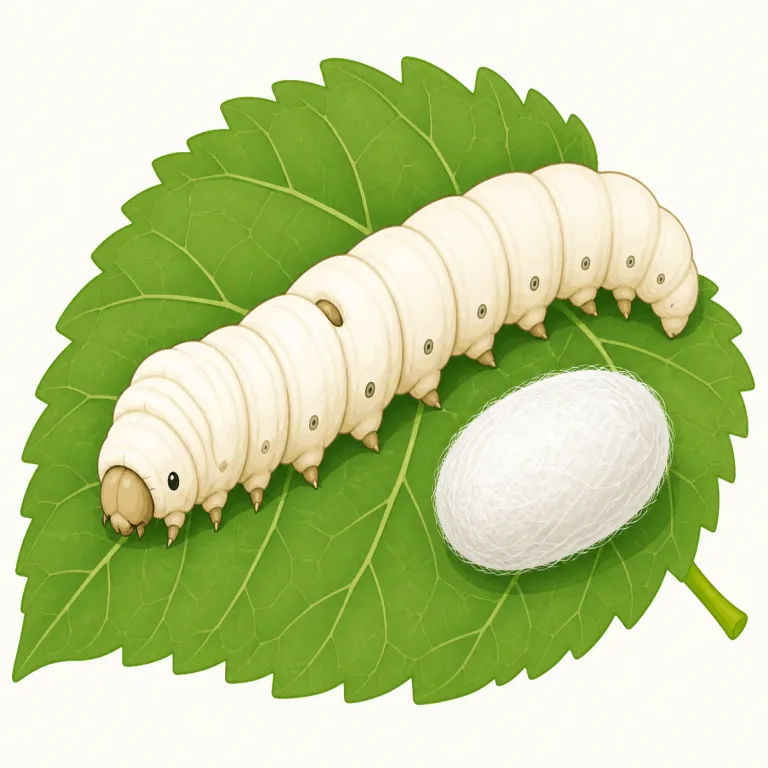
蚕
解説 Definition
絹を作るカイコガの幼虫。桑の葉を食べて繭を作り、その繭から絹糸が取れる。
A `silkworm` is the caterpillar of a moth that is raised to produce silk. The word is mainly used in farming and textile contexts, and it refers to an insect, not a true worm.
覚え方のコツ Memory Tip
silk + worm の直球複合語として覚えると定着しやすい。worm が「細長い虫」で、earthworm(ミミズ)や bookworm(本の虫)を知っていれば、その仲間として見える。つまり「silk を生み出す worm」= カイコ。セットで cocoon(繭)も押さえると、silkworms spin cocoons, silk is made from silkworm cocoons という流れで場面ごと記憶できる。butterfly や moth 自体ではなく、その幼虫を指す語だと区別すると混同しにくい。
This is a very direct compound: `silk + worm`. Think of it as "the worm that gives us silk." It becomes even easier if you connect it with `cocoon`: silkworms spin cocoons, and silk comes from them.
例文
The silkworm spins a cocoon of fine thread that is harvested to make silk.
蚕は細い糸を吐いて繭を作り、その繭から絹糸が採取される。
For thousands of years, people in China have raised the silkworm for its silk.
中国では数千年にわたり、絹を取るために蚕が飼育されてきた。
The silkworm feeds exclusively on mulberry leaves throughout its larval stage.
蚕は幼虫の間はずっと桑の葉だけを食べる。
silkworm の類義語・関連語
silkworm の語源・成り立ち Etymology
silkは古英語seoloc、wormは古英語wyrm「虫・へび」にさかのぼる複合語で、silk+wormとそのまま分解できます。silkwormは「絹を生む虫」が原義で、silkenやearthwormと比べると、素材名と生き物名を直結した素朴な命名だと見えてきます。
Silkworm is a simple compound of silk and worm. Silk comes from Old English seoloc, and worm comes from Old English wyrm, which could mean a worm, snake, or creeping creature. The word originally meant simply "the worm that produces silk," and it has kept that transparent structure in English. Related words include silken and earthworm.
同じレベルの語彙をもっと
外部辞書で調べる
この英単語をクイズで覚えよう