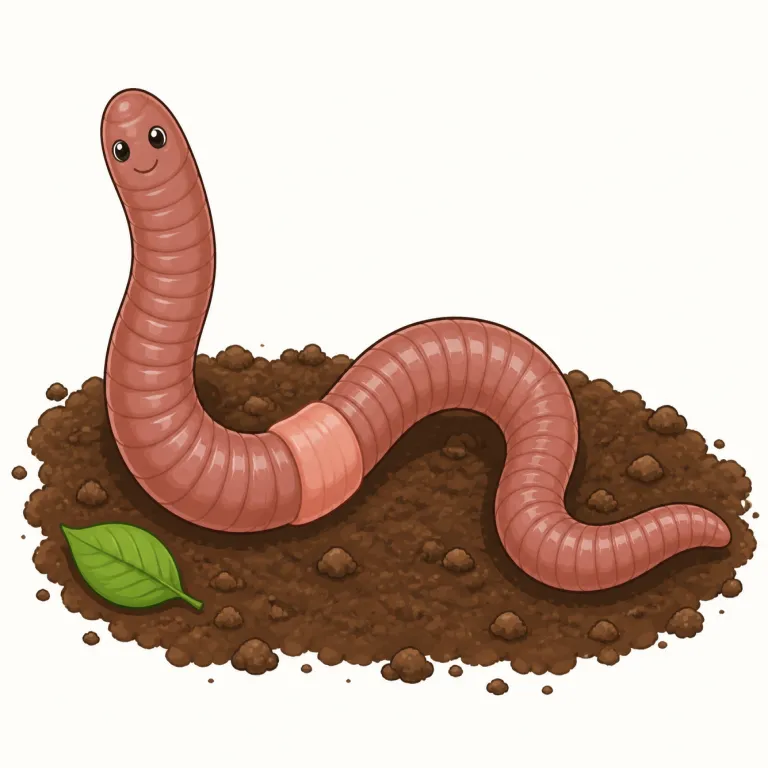
くねって進む、徐々に入り込む
verb 動詞worm one's way intoやworm one's way throughなどの形で、体をくねらせて狭い所を進むこと、または工夫や執拗な働きかけで徐々に入り込むことを表す。障害を避けながら少しずつ進む含みがある。
細長く柔らかい体をもつ虫、特にミミズを指す語。文脈によっては体内に寄生する虫を表すこともあり、IT分野ではネットワークを通じて自己増殖しながら広がる悪意あるプログラムのワームを指す。生物とコンピューターの両方で使われる多義語である。
A worm is a small, long, soft animal with no legs, often found in soil. It is a basic nature word, but it can also refer more generally to certain small creatures that look similar. In technology, "worm" can also mean a harmful computer program that spreads by itself.
worm はまず earthworm で覚えると芯がつかみやすいです。細長く柔らかく、くねって進む「虫」の感じが中心で、ここから parasitic worm(寄生虫)や computer worm(自己増殖して広がるワーム)にも意味が広がります。insect は虫の総称ですが、worm は脚のある虫全般ではなく、細長くうねるもの寄り。bookworm も「本に潜り込む虫」からの比喩で、語感ごと覚えると定着します。
Anchor this word with `earthworm`, the long soft animal in the ground. That gives you the core image: something thin, soft, and moving in a twisting way. From there, `parasitic worm` and even `computer worm` are easier to remember. `Bookworm` also sticks well because it uses the same image in a metaphor.
The children found a worm and put it back in the soil.
子どもたちはミミズを見つけ、土の中に戻しました。
Worms help keep the soil healthy.
ミミズは土を健康に保つのに役立ちます。
A worm spread from one computer to another.
ワームがあるコンピューターから別のコンピューターへ広がりました。
この語をはじめて出題された 42人 のうち 40人 が正解しました(95%)。
えいたんごクイズの回答から集計した独自データです。1人につき最初に出題されたときの1回だけを数えており、復習や2回目以降の回答、「わからない」と時間切れは含みません。 集計時点は 2026年7月18日 です。
文脈によって、次の意味でも使われます。
worm one's way intoやworm one's way throughなどの形で、体をくねらせて狭い所を進むこと、または工夫や執拗な働きかけで徐々に入り込むことを表す。障害を避けながら少しずつ進む含みがある。
犬・猫・家畜などに薬を与え、体内の寄生虫を除くことを表す他動詞。worm a puppy のように動物を目的語に取り、虫を加えるのではなく「虫を取り除く」という意味になる点に注意する。
worm は古英語 wyrm に由来するゲルマン系の語で、もとはミミズだけでなく蛇や竜のような「くねる生き物」も指した。分解語ではないが、うねって進む姿が意味の芯で、earthworm や古語 wyrm に同じ語幹が残る。だから bookworm も「本に潜り込む虫」の比喩として腑に落ちる。
Worm comes from Old English wyrm, a Germanic word. In early use, it could mean not only a worm but also a snake or dragon, with the shared idea of a long twisting creature. Over time English narrowed it to the small crawling animal, though the older sense still appears in old forms like wyrm and in compounds such as earthworm.
この英単語をクイズで覚えよう