長口上
解説 Definition
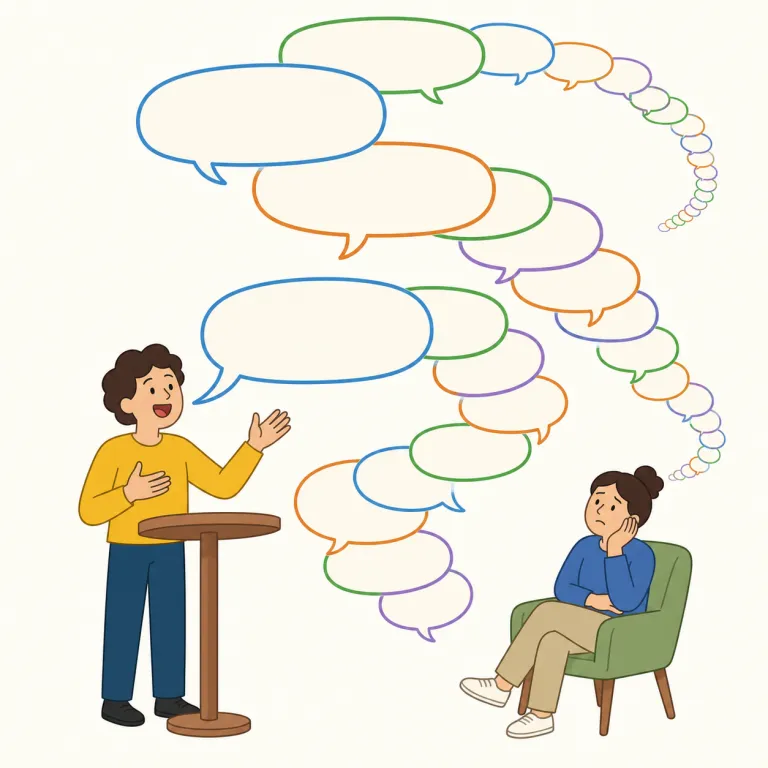
セールスマンや説得者が見込み客に向けて話す決まり文句やセールストークです。あらかじめ準備された、説得力のある長めのスピーチや説明を指します。
A spiel is a long, often practiced talk used to explain, persuade, or sell something. It can suggest that the speaker repeats the same speech many times. The word is informal and sometimes has a slightly negative feeling.
覚え方のコツ Memory Tip
spiel は、sales pitch の「長くて定型化した版」と置くと覚えやすいです。pitch が短めの売り込みなら、spiel は店員・営業・勧誘役が何度も同じ流れで語る、お決まりの説明口上。よく give someone a spiel の形で出て、「例の説明をひと通り聞かされる」場面と結びつけると残ります。単なる speech や talk ではなく、説得目的で、ややうんざりする長話の含みがあるのもポイント。spill や spell とつづりを取り違えないよう注意すると定着しやすいです。
Think of a salesperson giving the same long talk again and again. A `spiel` is not just any speech: it often sounds practiced, persuasive, and a little tiring. The phrase `give someone a spiel` is a strong memory hook.
例文
The car salesman launched into his usual spiel about the vehicle's features.
その自動車セールスマンは、車の特徴についていつもの売り文句を並べ始めました。
She delivered her spiel so smoothly that customers believed every word.
彼女の売り口上は実に滑らかで、客はその一言一句を信じ込みました。
The motivational speaker's spiel inspired the audience to take action.
その講演者の説得力ある長口上は、聴衆に行動を起こすよう促しました。
spiel の類義語・関連語
spiel の語源・成り立ち Etymology
spielはドイツ語spielen「遊ぶ・演奏する」から入った語です。Spielやglockenspiel、英語playも同根で、もとは「演じる・奏でる」感覚。そこから人を乗せるよどみない口上、つまり長い売り文句を指すようになりました。
Spiel comes from German spielen, meaning "to play" or "perform." It is related to German Spiel and English play through the same wider Germanic family. The sense shifted from performing or acting to a smooth, practiced speech, especially one used to persuade people.
同じレベルの語彙をもっと
外部辞書で調べる
この英単語をクイズで覚えよう