回収不能な、既に費やされた
adjective 形容詞費用・投資・時間などがすでに投入され、取り戻せない状態を表します。特にsunk cost「埋没費用」で用い、単に損失が出たというより、今後の判断では回収不能な過去の支出である点を強調します。
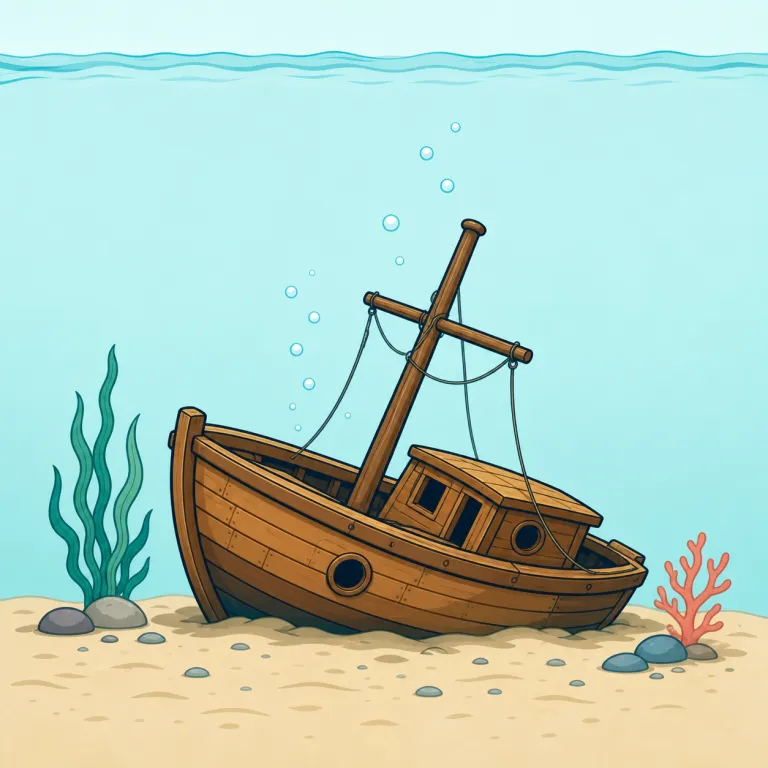
水面より下へ沈み、水中や水底にある状態を表す。sinkの過去分詞形。
This adjective describes something that has gone below the surface of the water and is now underwater or on the bottom. It emphasizes the resulting state rather than the event of going down.
sunk は sink「沈む」の過去分詞からできた語で、「すでに水面下へ沈んでいる状態」に焦点があります。湖底に横たわる船を思い浮かべ、a boat lay sunk at the bottom「船が底に沈んだ状態で横たわった」と一続きで覚えます。単純過去 sank が「その時に沈んだ」という出来事を述べるのに対し、sunk は completely sunk や remain sunk のように結果の状態を表します。名詞の前では a sunken ship も多い、と併せて整理すると混同しにくいです。
Think of a boat already lying at the bottom of a lake. Use this form for the resulting state, as in "remain sunk," while "sank" describes the past event.
The boat lay sunk at the bottom of the lake.
その船は湖の底に沈んだ状態で横たわっていました。
The treasure remained inside the ship as it lay sunk.
船が沈んだまま、宝はその中に残っていました。
By morning, the damaged raft was completely sunk.
朝までに、壊れたいかだは完全に沈んでいた。
文脈によって、次の意味でも使われます。
費用・投資・時間などがすでに投入され、取り戻せない状態を表します。特にsunk cost「埋没費用」で用い、単に損失が出たというより、今後の判断では回収不能な過去の支出である点を強調します。
困難な状況から逃れられず、失敗や破滅が避けられない状態を表す口語的な用法です。特にwe're sunkのように補語として使われ、助けや解決策がなければもう望みがないという判断を表します。
古英語 sincan(沈む)の過去分詞形。ゲルマン祖語 *sinkwan- に遡る。関連語: sink(沈む)、sunken(沈んだ)。経済用語の sunk cost(埋没費用)は「すでに沈んで回収不能」という比喩から生まれた表現。
This is the past participle of "sink," which comes from Old English "sincan" and can be traced to Proto-Germanic "*sinkwan-."
この英単語をクイズで覚えよう