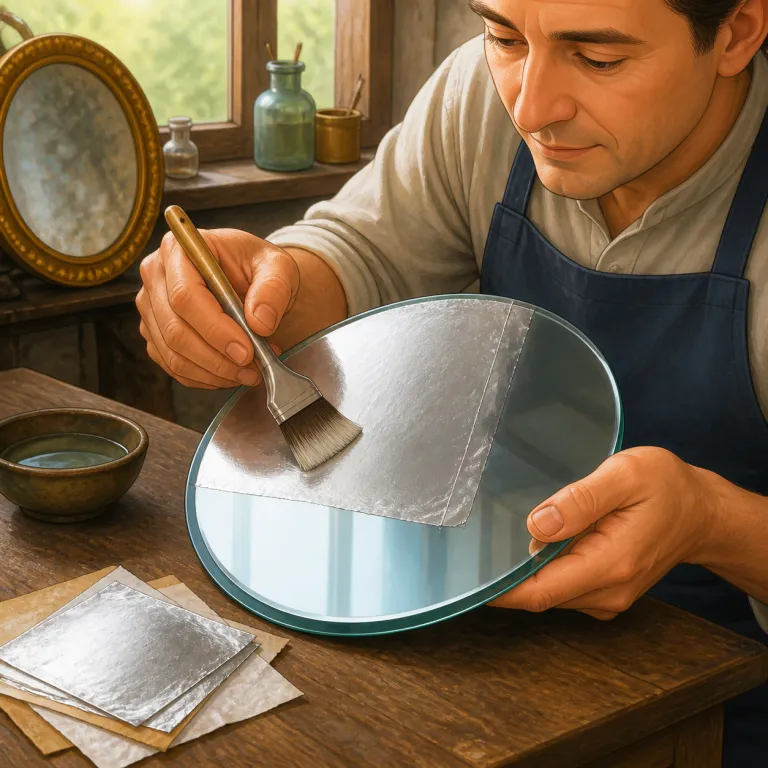
鏡の裏張りの錫箔
解説 Definition
tain は、鏡の裏面に施して反射面を作るための薄い金属膜、特に錫や錫を含む箔状の裏張りを指す名詞です。現代では専門的・歴史的な語ですが、古い鏡の製法や修復、骨董品の説明などで見られます。日常語ではありませんが、語義としては明確な英単語です。
Tain is the thin layer of metal put on the back of glass to make a mirror reflect. It is a technical and uncommon word, mainly used in older, artistic, or specialized contexts. Most learners will see it only rarely.
覚え方のコツ Memory Tip
日常語ではないので、単独の意味暗記より、まず `tin`(錫)を知っているなら「鏡の裏にある薄い金属層」という場面ごと固定すると残りやすいです。出るのは古い鏡、修復、骨董の説明が中心で、`the tain of a mirror` のように鏡の反射面の裏張りを指します。見た目が `stain` と近くて混同しやすいので、「しみ」ではなく「鏡の裏の金属膜」とセットで覚えるのが安全です。`paint` のような表面の塗りではなく、反射を生む裏側の層だと意識すると定着します。
This is a rare word, so tie it to a strong image instead of trying to memorize it alone. Think of the thin metal layer on the back of an old mirror, and connect it with `tin`, which sounds close. Also be careful not to mix it up with `stain`, which is completely different.
例文
The craftsman applied a thin layer of tain to the back of the glass.
職人はガラスの裏面に薄い錫箔の層を施した。
Old mirrors often lose their reflective quality as the tain deteriorates.
古い鏡は、裏張りの錫箔が劣化すると反射性が失われることが多い。
The antique mirror's tain had worn away in spots, creating dark patches.
そのアンティークの鏡は錫箔が所々摩耗し、黒い斑点ができていた。
tain の類義語・関連語
類義語
tain の語源・成り立ち Etymology
鏡の裏張りに使う錫箔を表す `tain` は、フランス語 `étain`「錫」から入った語です。さらに古フランス語 `estain`、ラテン語 `stannum` にさかのぼり、『錫そのもの』がそのまま素材名になったと考えると意味がつかめます。関連語は `stannic`、`stannous` です。
Tain was borrowed from French étain, meaning "tin." That French word goes back through Old French estain to Latin stannum, also "tin." In English, the metal name came to be used especially for the thin tin backing used on mirrors, and it is related to scientific words like stannic and stannous.
同じレベルの語彙をもっと
外部辞書で調べる
この英単語をクイズで覚えよう