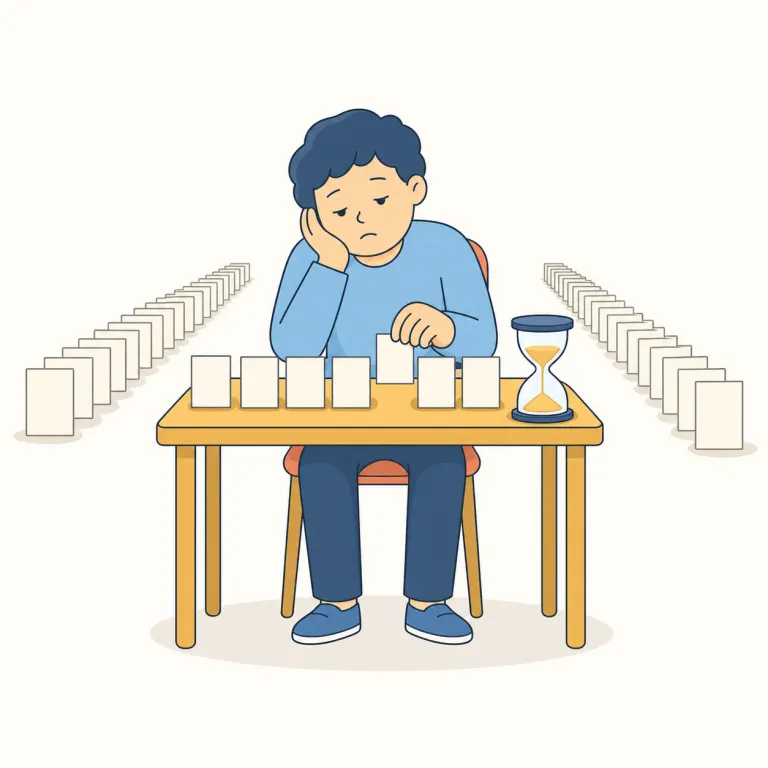
tedium
tedium はTOEIC 860・TOEFL 80・IELTS 6.5レベルの英単語で、「退屈さ」という意味があります。発音記号は /ˈtiːdiəm/ です。
退屈さ
解説 Definition
退屈や単調さ、つまらなさという意味です。何かが単調で、退屈で、時間が長く感じられる状態を指します。
Tedium is the feeling of being bored because something is too slow, repeated, or uninteresting. It often describes tasks or situations that feel tiring because they go on for too long without variety. The word is more formal than simple words like boredom.
覚え方のコツ Memory Tip
tedium はまず形容詞 tedious「うんざりするほど退屈な」を知っていると覚えやすいです。tedious な作業や会議が長引いた結果、心に残る「退屈さ・単調さ」そのものが tedium。boredom よりも、『同じことが続いて時間がやけに長く感じる』響きが強い語です。monotony にも近いですが、tedium は気が滅入る感じまで含みやすいのが特徴。the tedium of paperwork, housework, daily routine のように、繰り返し作業の場面とセットで覚えると定着します。
If you know `tedious`, this word is easier: `tedium` is the noun form. Think of the feeling left by long, repetitive work or meetings. It is close to `boredom`, but it suggests dull repetition that feels endless.
例文
The tedium of the long meeting made everyone drowsy.
長い会議が退屈で、みんな眠くなりました。
To break the tedium of daily routines, she started a new hobby.
日々の決まりきった生活の退屈さを紛らわすために、彼女は新しい趣味を始めました。
Many people find the tedium of commuting exhausting.
通勤の退屈さは多くの人を疲れさせます。
tedium の類義語・関連語
tedium の語源・成り立ち Etymology
tedium はラテン語 taedium「うんざり、嫌気、退屈」に由来し、背後には taedet「嫌になる」があります。『もうたくさんだと感じる心の重さ』が語感の核で、関連語の tedious も同じく「退屈で長い」という意味です。
Tedium comes directly from Latin taedium, meaning weariness, disgust, or boredom. It is related to the Latin verb taedet, meaning to make someone feel tired of something. The word kept that sense of mental heaviness and fed into English tedious, which describes something that causes that feeling.
同じレベルの語彙をもっと
TOEIC 860の一覧へ →外部辞書で調べる
この英単語をクイズで覚えよう