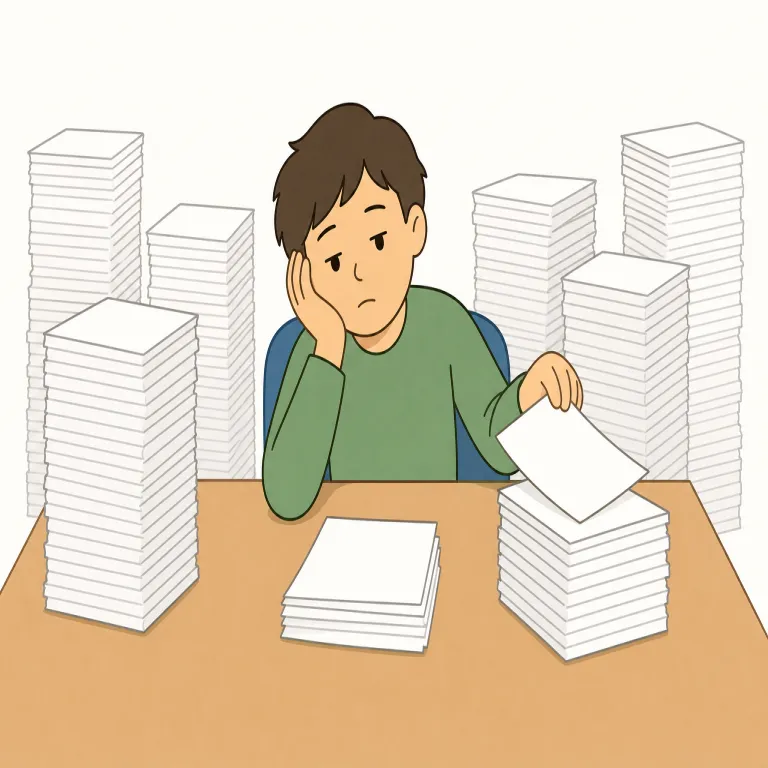
tedious
tedious は英検準1級・TOEIC 990・TOEFL 100・IELTS 7.5レベルの英単語で、「退屈な、うんざりする、単調な、つまらない」という意味があります。発音記号は /ˈtiːdɪəs/ です。
退屈な
解説 Definition
退屈なとは、長すぎたり、単調すぎたりして興味や楽しさを感じられないことを意味します。繰り返しの多い作業や、進行が遅いと感じるプロセスに対して使われることが多いです。退屈な活動は集中力の低下や倦怠感を引き起こすことがあります。
Tedious means boring because something is too slow, repeated, or lacking in interest. It is often used for tasks, processes, or long periods of time that feel tiring to continue. The word suggests both boredom and annoyance.
覚え方のコツ Memory Tip
このエントリでは tedious を「退屈な」として覚えます。長すぎる話、単調な講義、変化のない作業など、興味を保てず眠くなるような対象に使います。同じ tedious には「うんざりする」という基本義もありますが、ここでは特に boring に近い「楽しさや刺激がなく、関心が続かない」面に意識を置くと区別しやすくなります。
Connect it with `tired`. `Tedious` describes something so long, repetitive, or slow that it makes you feel mentally tired. It is stronger and more specific than `boring`, especially in phrases like `tedious work` or `a tedious process`.
例文
The tedious paperwork took hours to complete.
その退屈な書類仕事を終えるのに何時間もかかりました。
She found the lecture tedious and struggled to stay awake.
彼女はその講義を退屈に感じ、眠気と戦いました。
The tedious process of sorting through old files took the entire day.
古いファイルを整理する退屈な作業に一日中かかりました。
うんざりする
(意味 2)解説 Definition
tedious は、長く単調で手間がかかり、続けるほど嫌になる様子を表します。書類作業、待ち時間、細かな確認など、忍耐を削る対象に使われ、単に面白くない以上の疲労感やいら立ちを含みます。
Tedious describes something that feels long, repetitive, and tiring to continue. It is often used for tasks, processes, or waiting that require patience because they are slow, detailed, or monotonous. Compared with boring, tedious often suggests more mental fatigue and irritation, not just a lack of interest.
覚え方のコツ Memory Tip
tedious は tedium「倦怠、うんざりする気分」と同じ語根を持つ語です。tired「疲れた」と直接の語源関係はありませんが、意味の感覚としては「精神的に疲れさせる」と結びつけると覚えやすいです。boring は広く「つまらない」ですが、tedious は tedious task, tedious process のように、長い・細かい・繰り返しが多いせいで我慢が必要な場面に出やすい語です。
Tedious is from the same root as tedium, which means a feeling of weariness or boredom. It is not directly related to tired, but you can remember it as something that makes you feel mentally tired. Boring is a wider word, while tedious is often used for long, detailed, repetitive tasks or processes that test your patience.
例文
Filling out all the forms by hand was a tedious job.
書類を全部手書きで埋めるのは、うんざりする作業だった。
The meeting became tedious once they started discussing every small detail.
細かい点を一つ一つ議論し始めてから、その会議はうんざりするものになった。
Even a tedious process can be easier if you break it into smaller steps.
うんざりする手順でも、小さな段階に分ければ少し楽になることがある。
単調な
(意味 3)解説 Definition
つまらなくて退屈である。変化に乏しく単調で、時間が長く感じられる。
例文
The tedious rhythm of the music made us drowsy.
その音楽の単調なリズムは私たちを眠くした。
His speech was tedious with no variation in tone.
彼のスピーチはトーンに変化がなく、単調だった。
The tedious pattern of her daily routine never changed.
彼女の日常の単調なパターンは決して変わりませんでした。
つまらない
(意味 4)解説 Definition
退屈で時間がかかる
例文
The long meeting was tedious and nobody stayed awake.
その長い会議はつまらなく、誰も起きていなかった。
Reading the instruction manual is tedious but necessary.
取扱説明書を読むことはつまらないが必要である。
The job was tedious because I had to repeat the same task.
その仕事はつまらなかった、なぜなら同じタスクを繰り返す必要があったからです。
tedious の語源・成り立ち Etymology
tedious は古フランス語 tedieus を経て、後期ラテン語 taediosus「うんざりさせる」に由来し、さらにラテン語 taedium「倦怠・嫌気」にさかのぼります。語源の核は「人を飽きさせ、気力を削る」感覚で、だから単なる長さより「うんざりする退屈さ」を表します。関連語は tedium。
Tedious came through Old French tedieus from Late Latin taediosus, based on Latin taedium meaning "weariness" or "disgust." The word originally carried the feeling of something that causes mental tiredness or annoyance. That is why tedious suggests not just length, but the kind of length that makes people lose patience; tedium shares the same root.
外部辞書で調べる
この単語を英単語クイズで覚えよう