穴開け、掘削
noun 名詞ドリルなどを使って木材・金属・地面に穴を開ける作業や工程を指します。退屈さとは無関係な bore の意味に由来し、工事・製造・地質調査などの文脈で使われます。
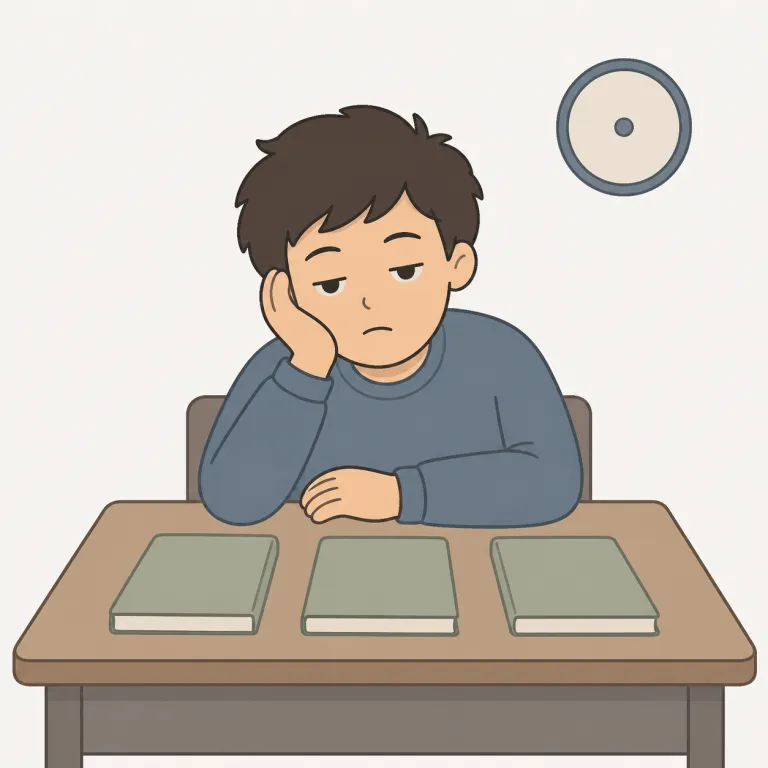
boring は英検4級レベルの英単語で、「退屈な」という意味があります。発音記号は /ˈbɔːrɪŋ/ です。
人や出来事が興味を引かず、時間が長く感じられる様子を表す形容詞です。話や授業などに刺激や変化が少なくて、集中しづらい場面で使われます。
Boring means not interesting and making you feel tired or unable to enjoy something. It is commonly used for activities, classes, movies, or people that do not hold attention. It describes the effect something has on the listener or viewer.
まず bore「人を退屈させる」を軸にすると覚えやすいです。boring は「退屈させる側」の形で、a boring class, a boring story のように授業や話そのものを説明します。人の気持ちは bored なので I’m bored と区別すると定着します。意味の近い dull より会話で広く使え、interesting の反対として覚えると整理しやすいです。長い会議・単調な作業・展開のない映画など、刺激が少なく時間が長く感じる場面を思い浮かべると残ります。
Remember the base verb `bore`, which means to make someone feel this way. So `boring` describes the thing that causes the feeling, like `a boring class` or `a boring story`. Keep it separate from `bored`, which is for the person who feels it.
This book is boring.
この本は退屈です。
The movie was boring.
その映画は退屈でした。
His story is boring.
彼の話は退屈です。
文脈によって、次の意味でも使われます。
ドリルなどを使って木材・金属・地面に穴を開ける作業や工程を指します。退屈さとは無関係な bore の意味に由来し、工事・製造・地質調査などの文脈で使われます。
boring は bore「退屈させる」の現在分詞で、18世紀英語で広まった語です。bore は古英語 borian「穴をあける」と結びつくとされ、話が心をじわじわ穿つ感じから「退屈な」へ進んだと見ると覚えやすく、関連語に bored, boredom がある。
Boring comes from bore in the sense "to make someone bored," with the -ing ending. This sense became common in English in the 18th century, and it is often linked to bore meaning "to drill a hole," from Old English borian. The idea is that something dull seems to wear into the mind in an unpleasant way; related words are bored and boredom.
この英単語をクイズで覚えよう