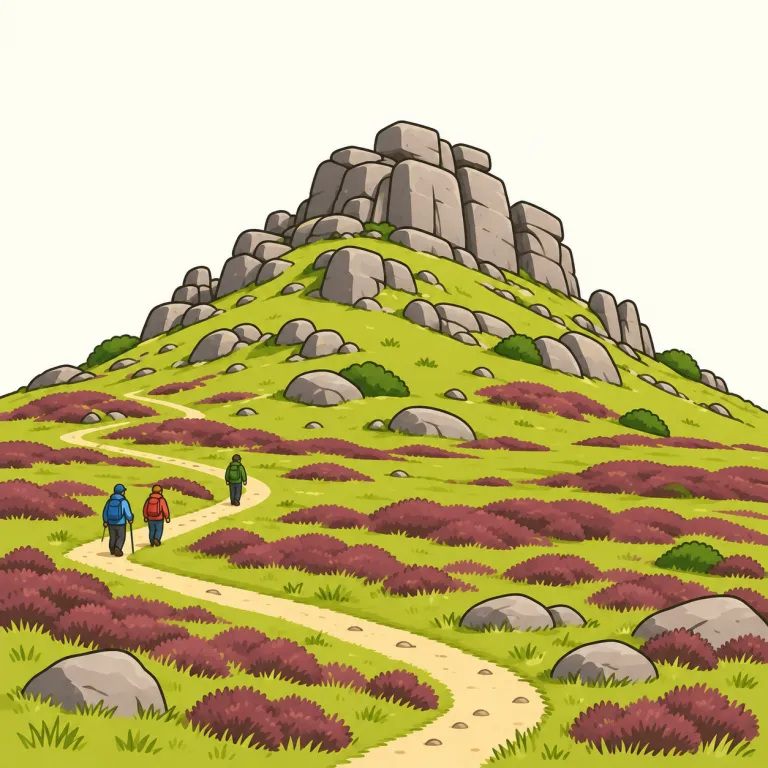
トール
解説 Definition
tor は、特に英国の荒野などに見られる、周囲から目立って突き出た露岩・岩峰、または岩を頂く丘を指す地形語です。
A prominent rocky outcrop or a hill topped by exposed rock, especially one rising conspicuously above moorland or the surrounding landscape in Britain.
覚え方のコツ Memory Tip
tor は主に英国の地形を表し、丘や尾根からごつごつ突き出た露岩・岩山を指します。rock より地形名らしく、crag より独立して目立つ岩の高まりを連想すると覚えやすい語です。地名にも現れるので、荒野の丘に大きな岩塊が露出している景色と結び付けましょう。
Remember a tor as a natural rocky landmark, especially in the British landscape. Picture a rough mass of exposed stone rising from the top of a hill or standing above open moorland. This separates it from the very general word rock: a tor is usually a conspicuous landform, not a loose stone. It can overlap with crag, but tor often suggests an isolated rocky outcrop or rock-crowned hill. The word also appears in British place names, reinforcing its connection with terrain.
例文
The tor rose above the moor.
その岩峰は荒野の上にそびえていました。
We climbed the tor to see the surrounding countryside.
私たちは周囲の田園地帯を眺めるため、その岩山に登りました。
tor の類義語・関連語
tor の語源・成り立ち Etymology
tor は「岩山・巨岩」を表す語で、古英語 torr、さらにケルト系語に由来すると考えられます。地面からごつごつ突き出た岩の姿が語の核にあり、その見た目どおりに「トール、岩山」の意味になりました。関連する形に Welsh twrr があります。
Tor is an old word for a rocky hill or prominent mass of exposed rock. It appears in Old English as torr and is generally associated with Celtic vocabulary found in Britain; Welsh twrr, meaning a heap or pile, is often compared with it. The exact path of transmission is not completely certain, so the safest historical connection is the long-standing regional use of the word for conspicuous rocky landforms.
同じレベルの語彙をもっと
外部辞書で調べる
この英単語をクイズで覚えよう