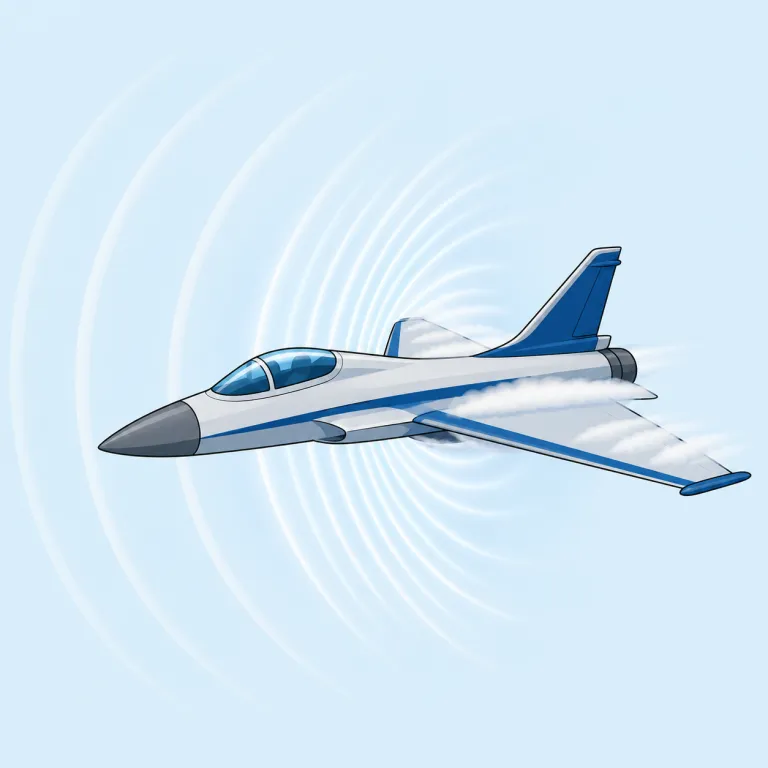
遷音速
解説 Definition
音速に近い、またはほぼ音速の領域に関する航空工学用語。航空機が亜音速から超音速への移行領域を飛行する際に適用される。
Transonic describes speeds that are close to the speed of sound. It is often used in aviation, physics, and engineering when talking about aircraft or airflow. This range is important because air behavior starts to change in complex ways there.
覚え方のコツ Memory Tip
sonic は supersonic(超音速)や sonic boom で見た「音・音速の」だと思い出す。そこに trans- が付くと「横切る・またぐ」ので、transonic は subsonic と supersonic の境目をまたぐ状態。航空では transonic flight / transonic speeds が頻出で、「速い」一般語ではなく、音速近辺で空気抵抗や衝撃波の出方が急に変わる領域を指す専門語。supersonic=完全に超音速、transonic=その手前からまたぐ帯、という対比で覚える。
Use `sonic` first: it appears in `supersonic` and relates to sound or sound speed. Then add `trans-`, meaning across, so `transonic` is the stage that goes across the sound barrier area. Remember the contrast: `supersonic` is above it, while `transonic` is around the crossing point.
例文
The aircraft encountered transonic shock waves as it approached the speed of sound.
その航空機は音速に近づくにつれ、遷音速域の衝撃波に遭遇した。
Transonic flight testing is critical for developing high-speed aircraft.
遷音速飛行テストは高速航空機の開発に不可欠である。
Engineers must account for transonic effects when designing jet aircraft wings.
エンジニアはジェット航空機の翼を設計する際に遷音速効果を考慮する必要がある。
transonic の類義語・関連語
紛らわしい語
transonic の語源・成り立ち Etymology
transonic はラテン語 trans-「越えて」+ sonic「音の」から成り、sonic はラテン語 sonus「音」に由来します。sonar や sonorous も同根で、“音速の境目をまたぐ”状態を表すので、亜音速から超音速へ移る遷音速の感覚がそのまま語形に入っています。
Transonic combines trans-, meaning "across," with sonic, which comes from Latin sonus "sound." Related words include sonorous and sonar. The word was created to describe movement across the boundary of the speed of sound, so its form directly reflects that idea.
同じレベルの語彙をもっと
外部辞書で調べる
この英単語をクイズで覚えよう