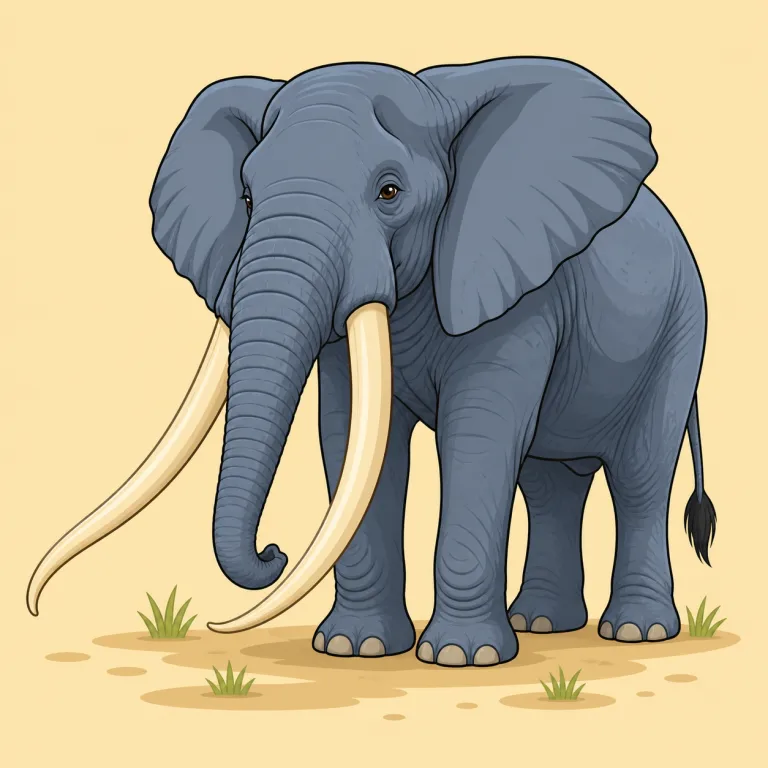
牙を持つ動物
解説 Definition
牙が発達した動物を指し、特に大きな牙を持つ雄の象やイノシシなどについて使われる語。文脈によっては単に牙のある動物全般ではなく、象牙を持つ象を指して用いられることが多い。
A tusker is an animal with large tusks, especially an elephant. The word is often used in wildlife contexts to refer to a male animal with noticeable tusks. It can suggest size, strength, or importance within a group.
覚え方のコツ Memory Tip
まず tusk=牙 を先に覚えると楽です。そこに -er が付いて「牙を持つもの」と見れば、tusker は形から意味が取れます。動物名を丸ごと暗記するより、tusk→tusker の派生で押さえるのが近道です。特に safari や wildlife の文脈では an old tusker で「立派な牙をもつ年長の雄の象」を指すことが多く、単なる elephant より牙の存在が焦点。tusk は牙そのもの、tusker はその牙を備えた動物、というズレを意識すると混同しにくいです。
Learn tusk first, then tusker becomes easy. The -er ending gives the idea of an animal that has tusks, so the form itself helps you remember it. In wildlife contexts, an old tusker often means an older male elephant with impressive tusks.
例文
The tusker had magnificent tusks.
その象は見事な牙を持っていた。
Tuskers were historically hunted for their valuable ivory.
牙のある象は高価な象牙を求めて昔から狩られてきた。
Modern wildlife protection safeguards tuskers from poaching.
現代の野生動物保護は牙のある象を密猟から守っている。
tusker の類義語・関連語
類義語
tusker の語源・成り立ち Etymology
tusker は tusk「牙」に -er「…を持つもの」が付いた語で、文字どおり「牙のある動物」です。tusk は古英語 tusc にさかのぼり、さらに「歯」を表す古い印欧語根と結びつくため、「突き出た大きな歯」というイメージがそのまま語義になっています。関連語は dental, tooth。
Tusker comes from tusk with the ending -er, meaning something that has tusks. Tusk goes back to Old English tusc and is connected with old Indo-European words for "tooth." The word therefore grew from the idea of a large projecting tooth, and it can be compared with tooth and dental.
同じレベルの語彙をもっと
外部辞書で調べる
この英単語をクイズで覚えよう