ティンパヌム、破風内部
noun 名詞建築で、教会入口のアーチに囲まれた半円形の壁面や、古典建築のペディメント内部を指す。彫刻や浮彫で装飾される部分として、美術史や建築史の文脈で用いられる。
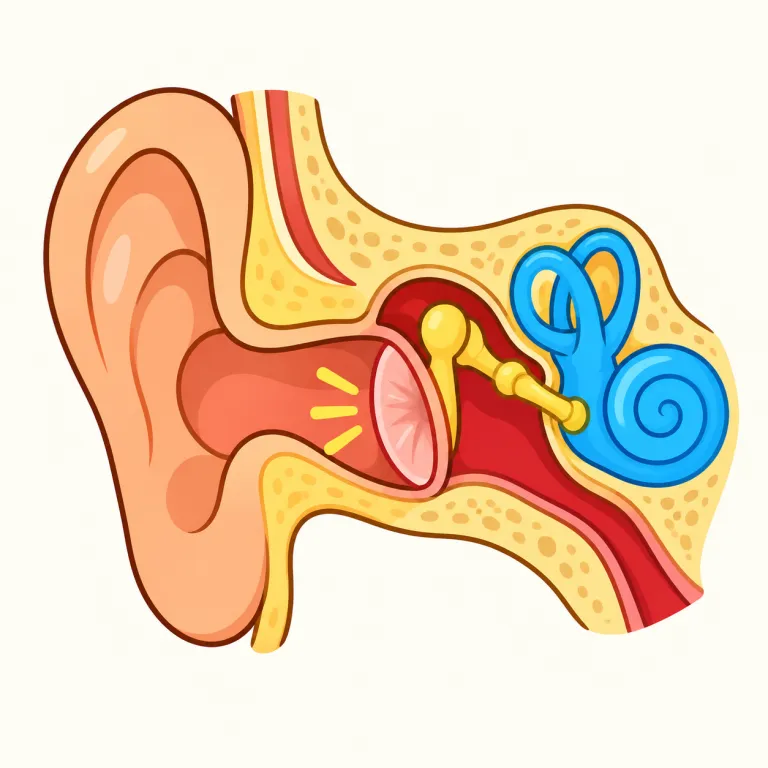
鼓膜、または鼓室(中耳)。耳の解剖学的部分。鼓膜は振動して音を伝える膜。
The tympanum is the eardrum, the thin part inside the ear that vibrates when sound enters. In biology and medicine, it is an important part of hearing. The word is technical and is more common in formal contexts than in everyday conversation.
まず drum を軸に覚えるとよい。鼓膜は英語でも eardrum と言うので、「耳の中の drum が震えて音を伝える部分」が tympanum。医学語では tympanic membrane, tympanic cavity など tympan- が耳の“鼓”まわりに広がる。timpani(ティンパニ)や tympanic と並べて見ると、どれも“太鼓のように張って響く”感覚でまとまる。日常会話では eardrum、解剖や医療では tympanum が出やすい。
Think of `drum` first: the eardrum is the drum inside the ear. `Tympanum` is the formal word, and it connects with `tympanic` and even `timpani`, all carrying the idea of something stretched and resonant like a drum. For daily English, you often hear `eardrum`; in medical English, `tympanum` appears.
The tympanum, or eardrum, vibrates when sound waves enter the ear.
音波が耳に入ると、鼓膜が振動する。
A punctured tympanum can cause hearing loss.
鼓膜が破れると難聴を引き起こすことがある。
The doctor examined the patient's tympanum, or eardrum, with an otoscope.
医師は耳鏡で患者の鼓膜を調べた。
文脈によって、次の意味でも使われます。
建築で、教会入口のアーチに囲まれた半円形の壁面や、古典建築のペディメント内部を指す。彫刻や浮彫で装飾される部分として、美術史や建築史の文脈で用いられる。
tympanum はラテン語 tympanum、さらにギリシャ語 tympanon「太鼓」に由来します。鼓膜が太鼓の皮のように張って振動することをそのまま名にした語で、形と働きが一致していて覚えやすいです。tympanic や tympani が関連語です。
Tympanum came into English from Latin tympanum, which came from Greek tympanon, meaning "drum." The name was used because the eardrum looks and works like a stretched drumhead that vibrates. Related English words include tympanic and tympani.
この英単語をクイズで覚えよう