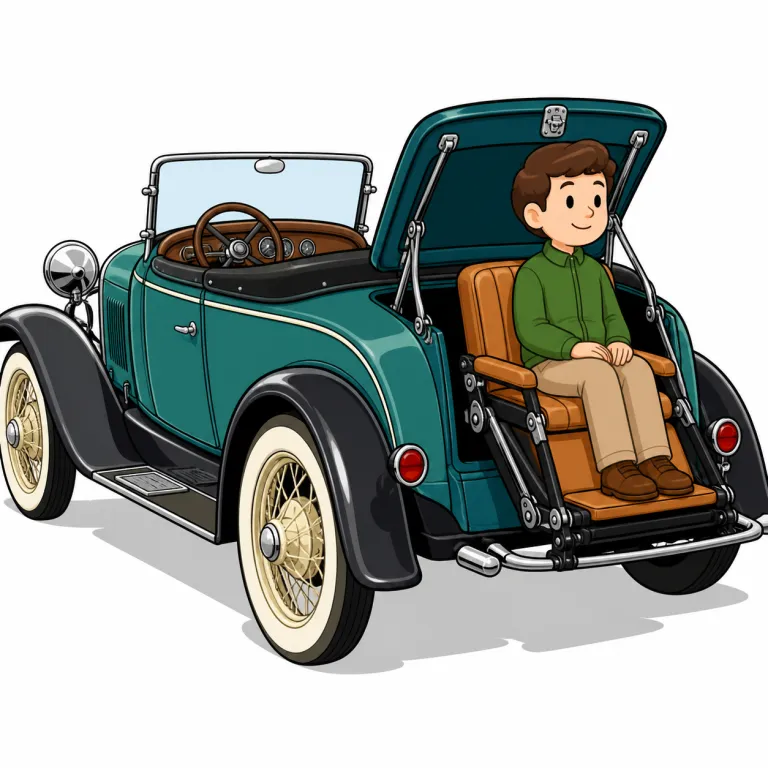
調子の悪い、弱った、不安定な
adjective 形容詞主にイギリス英語のくだけた表現で、機械などが正常に動かないことや、体の一部の具合が悪いことを表します。a dicky heart や a dicky engine のように名詞の前でよく使われます。
dicky は dickey seat の略として、古い車の後部に外付けされた小さな折りたたみ式補助席を指します。現代のオートバイの二人乗り用後部座席には、ふつう pillion seat などを使います。
A dicky is a small extra seat, especially an outside rear seat in an older car or carriage. The word is old-fashioned and is often seen in the phrase "dicky seat" or "dickey seat."
dicky は単独より dickey seat とセットで覚えると安全です。古い車の後ろにぱかっと開く小さな補助席を思い浮かべると、「ふつうの後部座席」ではなく外付けの簡易席だとわかります。バイクの後ろ座席ではなく、クラシックカーの予備席という場面に固定すると混同しにくいです。
This sense is easier to remember in the phrase "dicky seat" than as a single word. Picture a small extra seat at the back, not a normal full back seat. It is also an old-fashioned word, so keeping that image helps separate it from more modern words like pillion.
The old roadster had a dicky seat behind the main cabin.
その古いロードスターには、車室の後ろに折りたたみ式補助席が付いていました。
Children often rode in the dicky seat on short trips.
短い移動では、子どもたちがよくその折りたたみ式補助席に乗りました。
He restored the car's leather dicky seat.
彼はその車の革張りの折りたたみ式補助席を修復しました。
文脈によって、次の意味でも使われます。
主にイギリス英語のくだけた表現で、機械などが正常に動かないことや、体の一部の具合が悪いことを表します。a dicky heart や a dicky engine のように名詞の前でよく使われます。
dicky は dickey/dickie とも綴り、18世紀英語で Dick の愛称形から出た語ですが、この座席語義へのつながりは不明です。もとは馬車の外付け席や召使い席を指し、そこから「後ろに付く小さな二人目用の席」という感覚で、バイクの後部補助席にも結びつきます。関連語は dickey seat, dickie。
Dicky, also spelled dickey or dickie, appeared in 18th-century English and seems to be based on Dick, a familiar form of Richard. The exact link between the name and this noun is uncertain. It was first used for an outside seat on a carriage, then later for a similar extra seat in early cars.
この英単語をクイズで覚えよう