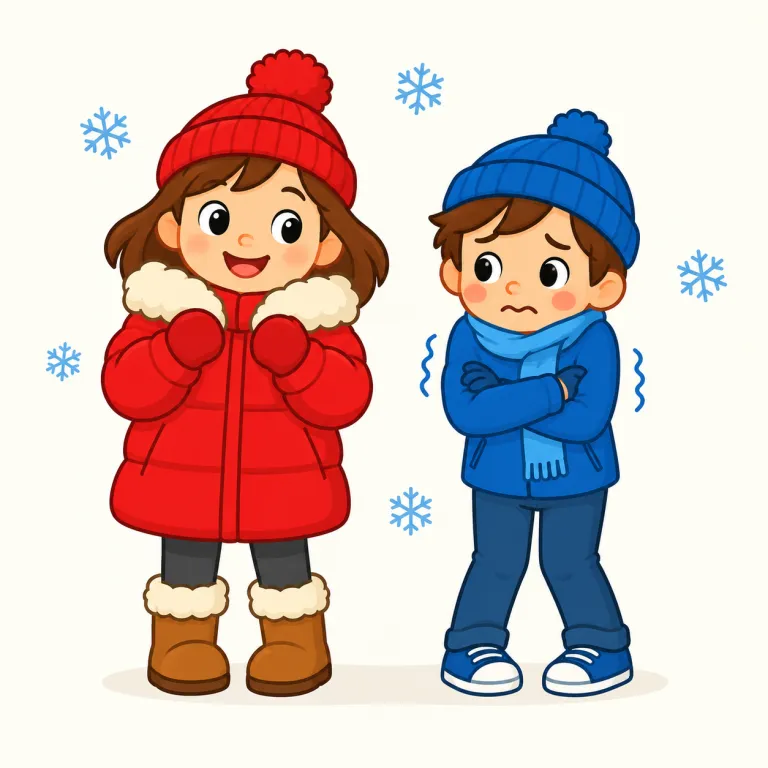
より暖かい
解説 Definition
warmer は warm(暖かい)の比較級です。ほかのものや以前の状態よりも暖かいことを表します。
Warmer is the comparative form of warm and describes someone or something having a higher, more comfortable temperature than another person, thing, place, or earlier condition. The comparison may be stated with than or understood from context.
覚え方のコツ Memory Tip
warm「暖かい」に比較級語尾 -er をそのまま付けて warmer「より暖かい」とします。発音は /ˈwɔːrmər/。warmer than yesterday のような than を伴う比較と、a warmer coat のように比較対象を明示しない用法をセットで覚えます。名詞なら「保温器」の意味もありますが、ここでは形容詞です。
Warmer is the comparative form of warm. Add the comparative ending -er directly: warm becomes warmer. It means “more warm” in relation to something else, not simply “warm.” Learn the explicit pattern warmer than yesterday and the contextual pattern a warmer coat, where the comparison is understood. Although warmer can also be a noun for a device that keeps something warm, the examples here use it as an adjective.
例文
Today is warmer than yesterday.
今日は昨日より暖かいです。
This room is warmer than the hall.
この部屋は廊下より暖かいです。
I need a warmer coat for the trip.
旅行にはもっと暖かいコートが必要です。
warmer の類義語・関連語
warmer の語源・成り立ち Etymology
古英語 wearm(暖かい)の比較級で、ゲルマン祖語 *warmaz に遡る。さらにラテン語 formus(温かい)やギリシャ語 thermos(熱い)とも印欧祖語で繋がる。関連語に warmth(温かさ)、lukewarm(生ぬるい)がある。体温や気候の心地よい熱を表す基本語。
Warmer consists of warm plus the comparative ending -er. Warm descends from Old English wearm and belongs to an old Germanic family of words referring to moderate heat. Related forms include warmth and the compound lukewarm. The comparative suffix -er is inherited from Old English and remains the normal way to compare many short adjectives. It is added directly to warm, producing warmer, “having a higher temperature or providing more warmth.”
同じレベルの語彙をもっと
外部辞書で調べる
この英単語をクイズで覚えよう