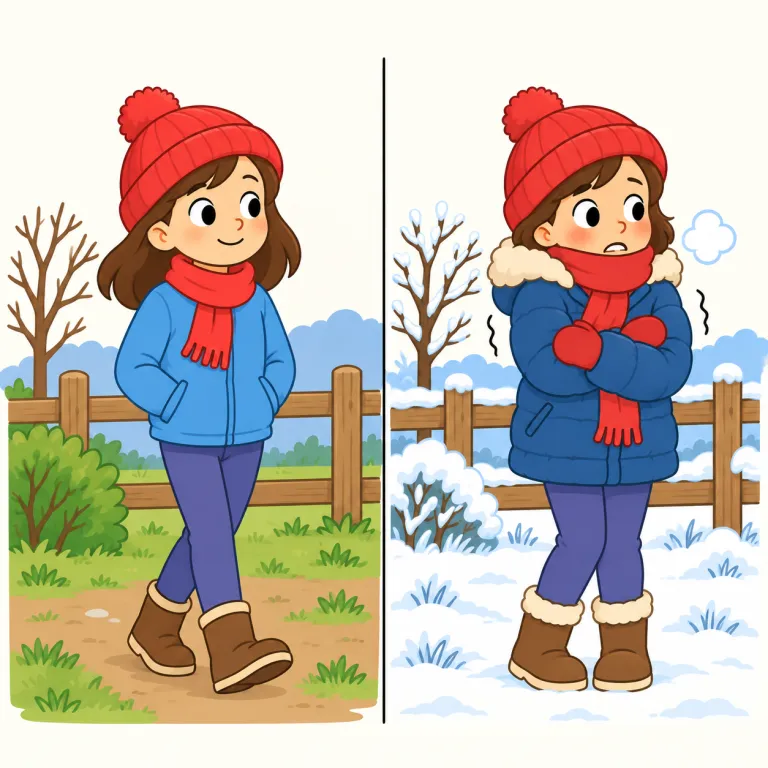
もっと寒い
解説 Definition
colder は cold(寒い、冷たい)の比較級で、「より寒い」「もっと冷たい」という意味です。天気や場所、物の温度を比べるときに使います。
Colder is the comparative form of cold and describes a person, place, object, or period having a lower temperature than another or than before. It is often followed by than or used after verbs such as become and get.
覚え方のコツ Memory Tip
colder は cold の比較級で、短い形容詞に -er を付けて「より寒い・冷たい」とします。cold の最後の d は残り、発音では後ろに /ər/ が加わります。colder than yesterday や gets colder の形で、二つの気温や変化を比べる場面と結び付けて覚えましょう。
Start with the base adjective cold and add the comparative ending -er: cold becomes colder, meaning “more cold” or “at a lower temperature.” The final d remains, and an extra /ər/ sound is added in common American pronunciation. Learn it through comparison patterns such as colder than yesterday and this room is colder than the kitchen. It also describes change without an explicit second item, as in the water gets colder. Use colder for a comparison; use cold when simply describing one temperature.
例文
Today is colder than yesterday.
今日は昨日より寒いです。
This room is colder than the kitchen.
この部屋は台所より寒いです。
The water gets colder in winter.
冬になると水はもっと冷たくなります。
colder の類義語・関連語
colder の語源・成り立ち Etymology
古英語 cald(寒い)の比較級で、ゲルマン祖語 *kaldaz に遡る。「冷たい」を意味する語根は、ラテン語 gelidus(凍った)とも同源。関連語: cold, chill。寒さで体が「固まる」感覚が原義。
Colder is the regular comparative form of cold, created by adding the inherited English comparative ending -er. Cold descends from Old English cald or ceald and has cognates in other Germanic languages, reflecting an ancient Germanic word for low temperature. The Japanese etymology also connects this older vocabulary with Latin gelidus, “icy” or “frozen,” within the broader history of Indo-European words associated with freezing and coldness.
同じレベルの語彙をもっと
外部辞書で調べる
この英単語をクイズで覚えよう