ハタオリドリ
noun 名詞草や葉などを巧みに編み合わせ、袋状の巣を作ることで知られる小型の鳥を指します。主にアフリカやアジアに生息し、weaver bird とも呼ばれますが、文脈が明確なら weaver だけでも用いられます。
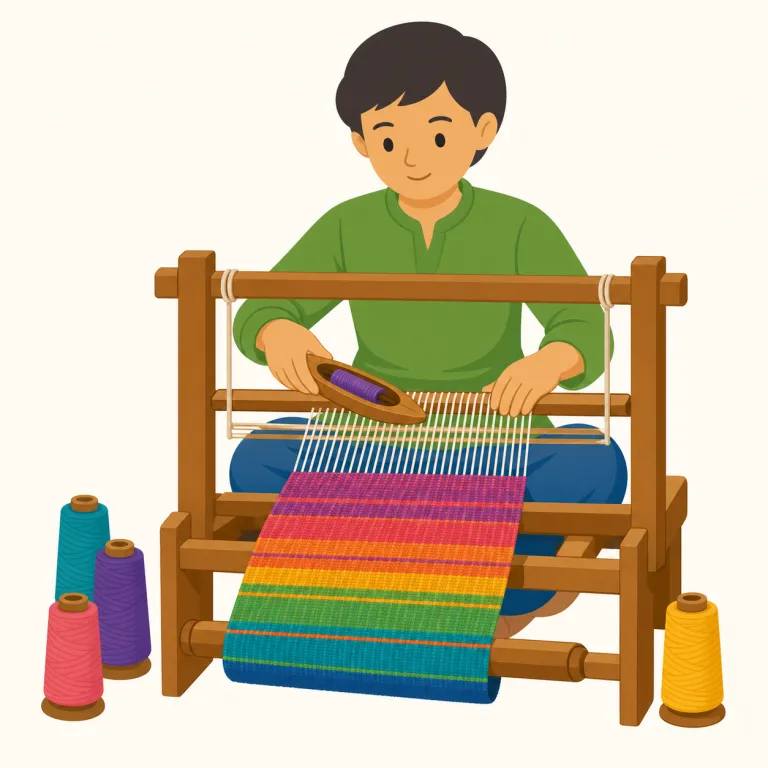
糸を織り機で縦糸と横糸を交差させて布を作る職人。織物を製造する技術者。
A weaver is a person who makes cloth by crossing threads together on a loom or by hand. The word is used in textiles, crafts, and traditional industries. It refers to both skilled handworkers and people who do this as a job.
まず weaver は weave(織る)+ -er(〜する人)でそのまま「織る人」。weave を知っていれば意味はかなり取りやすいです。web も「糸が織り合ったもの」という感覚でつながるので、線や糸を組み合わせて面を作るイメージを持つと残ります。knitter は棒針などで編む人で、weaver は布を織る人。a skilled weaver, traditional weavers のように職人文脈で出やすい語です。
Break it into "weave + -er," just like "teach + -er" becomes "teacher." If you know "weave," the noun is easy to build. It helps to connect it with cloth and fabric, and to contrast it with "knitter," who makes things by knitting, not weaving.
The skilled weaver created beautiful patterns.
その熟練した織工は美しい模様を織り出した。
The weaver used traditional techniques.
その織工は伝統的な技法を用いた。
Ancient weavers produced high-quality textiles.
古代の織り手たちは質の高い織物を作った。
文脈によって、次の意味でも使われます。
草や葉などを巧みに編み合わせ、袋状の巣を作ることで知られる小型の鳥を指します。主にアフリカやアジアに生息し、weaver bird とも呼ばれますが、文脈が明確なら weaver だけでも用いられます。
古英語 wefan「織る」から来た動詞 weave に、行為者を表す接尾辞 -er が付いた語です。意味は文字どおり「織る人」で、web や interweave も同じ語根なので、糸や線を組み合わせる感覚が核だとわかります。
Weaver is built from weave plus the agent ending -er, so it literally meant "a person who weaves." Weave comes from Old English wefan, meaning "to weave." The root idea is joining threads together into a pattern, and related words like web and interweave show the same sense of things being linked or woven together.
この英単語をクイズで覚えよう