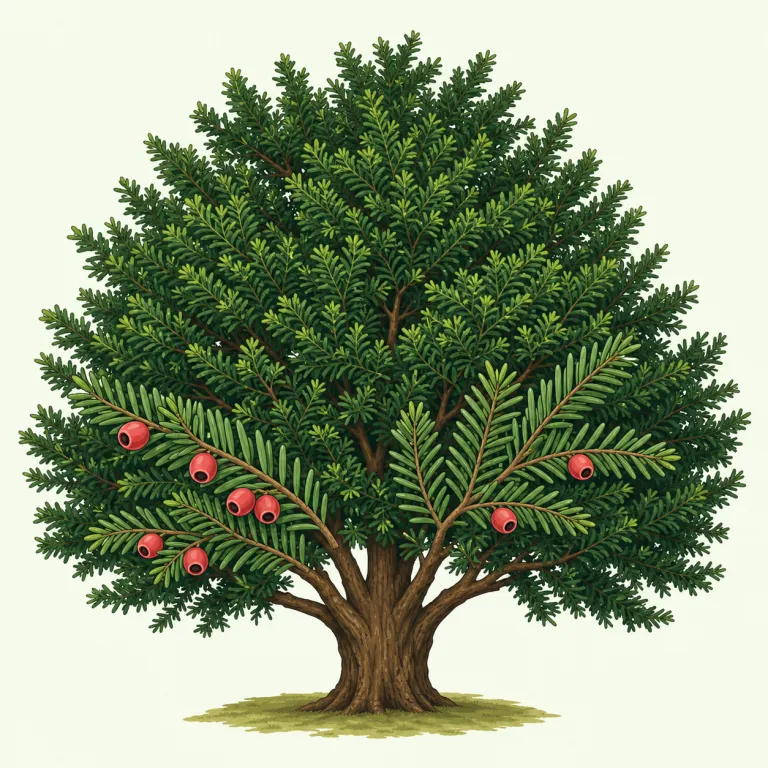
イチイ
解説 Definition
常緑の針葉樹で、イチイ科に属する木。成長が遅く、深い緑の葉を一年中保つので庭や庭園の生垣によく使われる。赤い実をつけるが種子や葉には毒性があるため、取り扱いに注意を要する。
A yew is a type of evergreen tree with dark green needles and red berry-like fruit. It is often found in gardens, parks, and churchyards, and its wood is valued for strength and flexibility. Some parts of the tree are poisonous, so the word is often used in botanical or nature-related contexts.
覚え方のコツ Memory Tip
まず tree 系の語として覚える。yew は庭園や教会の周りの hedge(生け垣)で見かける常緑樹、という場面ごと入れると定着しやすい。意味は broad な tree ではなく、pine や cedar のように「特定の木の名」の一つ。注意点は you / ewe と同音で非常に紛らわしいこと。you は代名詞、ewe は雌羊、yew だけが木。さらに red berries でも leaves and seeds are poisonous という特徴まで結ぶと区別しやすい。
Remember `yew` as the tree word in the sound group `you / ewe / yew`. `You` is a pronoun, `ewe` is a female sheep, and only `yew` is a tree. It often appears in garden or churchyard scenes, especially as a dark evergreen tree.
例文
A yew tree stood beside the church for hundreds of years.
イチイの木は教会のそばに何百年も立っていた。
We noticed red berries on the yew but were careful not to touch them.
イチイの赤い実に気づいたが、触らないように気をつけた。
The gardener trimmed the yew branches into a neat shape.
庭師はイチイの枝をきれいな形に整えた。
yew の類義語・関連語
紛らわしい語
yew の語源・成り立ち Etymology
yew は「イチイ」を表す古英語 ēow / īw から来た語で、さらにゲルマン祖語 *īwaz にさかのぼります。硬くてしなる木として知られ、木の名がそのまま定着したので、具体物の手触りが意味に残っています。同根語にドイツ語 Eibe、オランダ語 ijf があります。
Yew comes from Old English eow or iw, from an earlier Germanic root *iwaz. It has long been the name of the tree itself, especially one known for strong, flexible wood. Related words appear in other Germanic languages, such as German Eibe and Dutch ijf.
同じレベルの語彙をもっと
外部辞書で調べる
この英単語をクイズで覚えよう