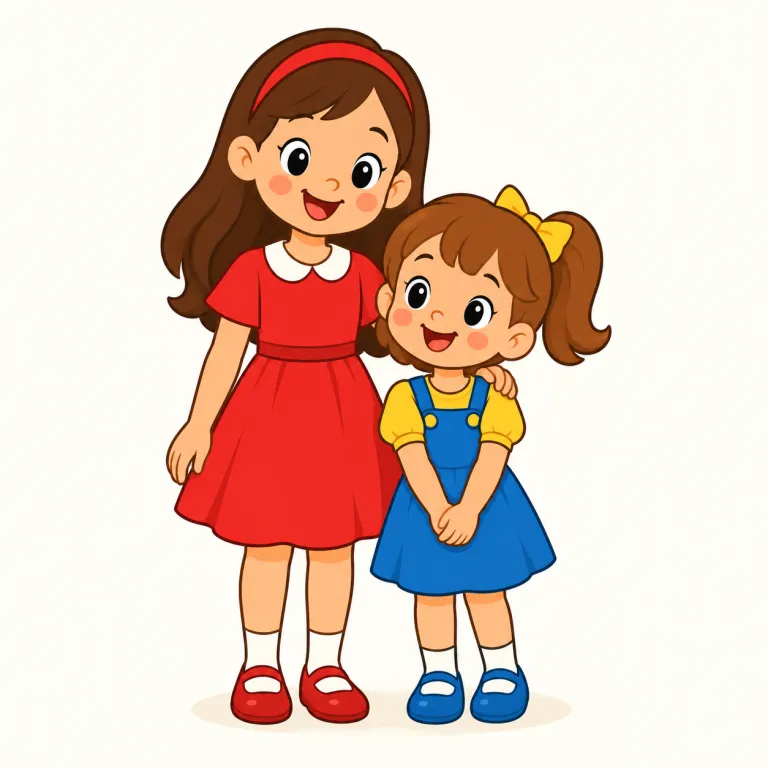
若い
解説 Definition
younger は young(若い)の比較級で、より若いという意味です。人や動物などの年齢を比べるときによく使います。
Having lived or existed for less time than another person, animal, or thing. Younger is the comparative form of young and is often used either with than or before a family or group noun to indicate lower age.
覚え方のコツ Memory Tip
原級 young「若い」に比較級の -er を付けた形です。発音は young /jʌŋ/ に対し younger /ˈjʌŋɡər/ となり、/ŋ/ の後の /ɡ/ も聞こえます。younger than は「〜より若い」、my younger sister は比較対象を明示せず「年下の妹」を表す定番表現として覚えましょう。
Younger is the regular comparative form of young: add -er to mean “more young” or, naturally, “lower in age.” The pronunciation changes noticeably: young ends in /ŋ/, while younger is pronounced /ˈjʌŋɡər/, with /ɡ/ heard before the comparative ending. Link it to two common patterns: “younger than his brother” makes an explicit comparison, while “my younger sister” means the sister who is lower in age without using than. Unlike smaller, younger compares age, not physical size.
例文
My younger sister is ten.
私の妹は10歳です。
He looks younger than his brother.
彼は兄より若く見えます。
The younger children played in the garden.
年下の子どもたちは庭で遊びました。
younger の類義語・関連語
younger の語源・成り立ち Etymology
younger は young「若い」に比較級の接尾辞 -er が付いた形です。young は古英語 geong、さらにゲルマン祖語 jungaz にさかのぼり、「年が少ない人」を比べて「より若い」とする語形がそのまま意味になっています。関連語は young, youth。
Younger consists of young and the comparative suffix -er. Young comes from Old English geong and is related to forms descended from Proto-Germanic jungaz, all referring to being at an early stage of life. The suffix -er has long been used in English and other Germanic languages to form comparisons. Thus, younger straightforwardly identifies someone or something as having less age than another.
同じレベルの語彙をもっと
外部辞書で調べる
この英単語をクイズで覚えよう