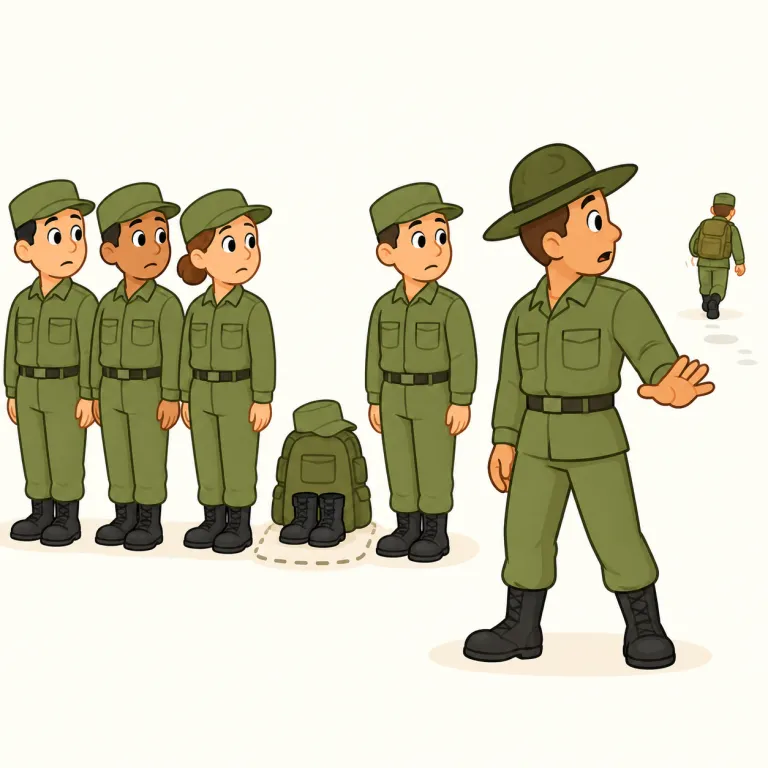
無断離脱
解説 Definition
軍務で、正式な許可を得ずに持ち場や部隊を離れている状態を表します。口語では、人や物が突然いなくなった、または見つからない状態にも使われます。
AWOL describes or refers to absence from military duty without official permission. In informal nonmilitary use, it can also describe a person or thing that has unexpectedly disappeared or cannot be found.
使い方 Usage
- go AWOL で「無断離脱する」。from one's unit などを続けると、離れた部隊や持ち場を示せます。 Go AWOL means to become absent without permission. Add a phrase such as from one's unit to identify the unit or post left behind.
- 口語では、人が突然いなくなったり、物が見当たらなくなったりした場合にも go AWOL を使います。 In informal speech, go AWOL can also describe a person suddenly disappearing or an object becoming impossible to find.
覚え方のコツ Memory Tip
AWOL は absent without leave の略です。absent「不在」、without「なし」、leave「休暇・不在の許可」を結び付け、「許可なく不在」と覚えましょう。
Expand AWOL as absent without leave. Connect absent with being away, without with lacking something, and leave with permission to be away: absent without permission.
例文
The soldier went AWOL from his unit.
その兵士は部隊から無断で離脱しました。
My phone has gone AWOL again.
私の携帯電話がまた見当たらなくなりました。
AWOL の類義語・関連語
類義語
対義語
派生語
AWOL の語源・成り立ち Etymology
AWOLは米軍の absent without leave「許可なき不在」の頭字語で、語源というより略語として生まれた語。関連語はabsent、leave。持ち場を許可なく離れた状態をそのまま縮めたので、「無断離脱」の意味がそのまま見える。
AWOL was formed as an initialism from the military expression absent without leave. In this phrase, leave means authorized permission to be away from duty, not simply the act of departing. The abbreviation became established in United States military use and is often pronounced as a word rather than as four separate letters. It later spread into informal civilian English, where go AWOL can mean to disappear unexpectedly or become unavailable without explanation.
同じレベルの語彙をもっと
外部辞書で調べる
この英単語をクイズで覚えよう