leave
leave は英検4級・英検7級レベルの英単語で、「去る、休暇」という意味があります。発音記号は /liːv/ です。
意味一覧 (2件)
去る
解説 Definition
今いる場所からはなれて、別の場所へ行くことを表します。学校や家、町などを出てそこを去るときに使います。
To go away from a place where you are. It is used when someone or something departs from a home, room, station, town, or other place.
覚え方のコツ Memory Tip
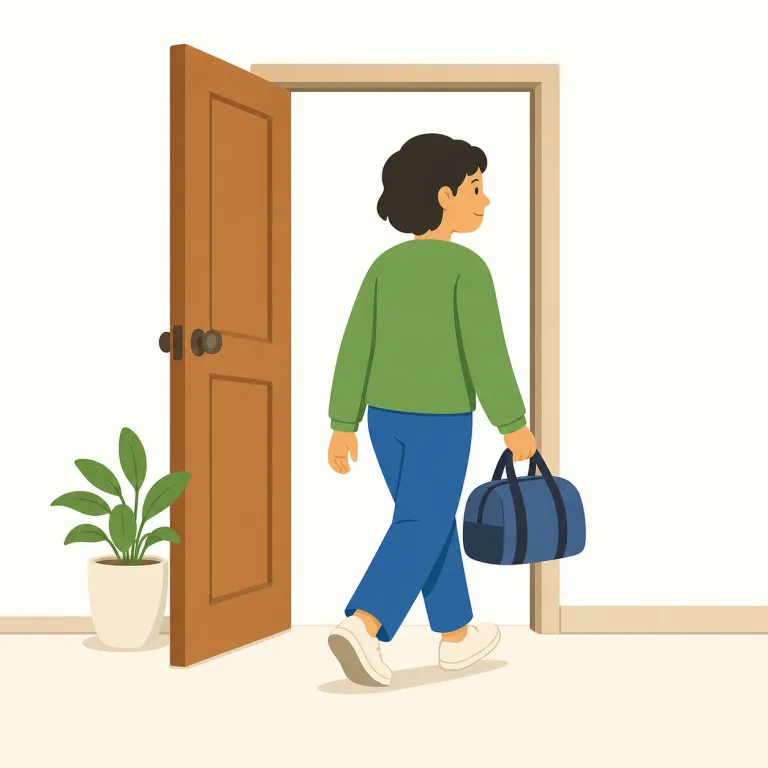
leave は、今いる場所から離れて「去る・出発する」動きを表します。家のドアを閉めて外へ出る場面と I leave home at seven. を結び付けると覚えやすいでしょう。leave home、leave school、leave the room のように、leave のすぐ後ろへ去る場所を置けます。「〜へ向けて去る」なら leave for Tokyo の形です。go が行き先へ進むことに目を向けるのに対し、leave は出発点を離れることが中心、と押さえると使い分けやすくなります。
Picture someone opening a door and going out. The basic idea of leave is moving away from the place you are in.
例文
I leave home at seven.
私は7時に家を出ます。
We leave school after lunch.
私たちは昼食のあと学校を出ます。
She leaves the room now.
彼女は今部屋を出ます。
休暇
(意味 2)
解説 Definition
仕事や学校を一定期間離れるために認められた休みを指す名詞。旅行や療養、家庭の事情などのために取ることが多く、有給休暇・病気休暇・育児休暇のように、目的や条件に応じて種類が分かれる。
Leave is time when someone is officially allowed to be away from work, school, or duty. It is commonly used for vacation, sick leave, parental leave, or personal leave. The word often refers to approved time off rather than simply going away.
覚え方のコツ Memory Tip
動詞の leave「離れる」を知っていれば、名詞 leave は「仕事や学校を離れていてよい期間」とつなげると覚えやすいです。point は、単なる娯楽の vacation より広く、制度上認められた休みを表しやすいこと。annual leave, sick leave, maternity leave のように種類とセットで頻出します。take leave / be on leave が定番で、「休暇そのもの」だけでなく「休んでよい許可」の感覚も意識すると定着します。
Connect it to the verb `leave`: if you are on `leave`, you are allowed to leave work for a time. That is why phrases like `annual leave`, `sick leave`, and `maternity leave` are so common. It is usually more about officially allowed time off than about a fun `vacation`.
例文
She took a week of leave for her vacation.
彼女は旅行のために1週間の休暇を取った。
He requested three days of leave to attend the wedding.
彼は結婚式に出席するために3日間の休暇を申請した。
Employees get 15 days of annual leave.
従業員は年間15日間の年次休暇を取得できる。
leave の類義語・関連語
類義語
対義語
leave を含む表現
句動詞・イディオムなど 9 件。クリックで各表現の詳細へ。
leave の語源・成り立ち Etymology
古い英語の laefan に由来し、「去る」「あとに残して行く」という意味で使われていました。もとの中心には、今いる場所からはなれて行くというイメージがあります。
Leave comes from Old English laefan, which could mean to go away or to let something remain behind. Its core image is moving away from a place where you are.
同じレベルの語彙をもっと
英検4級の一覧へ →外部辞書で調べる
この英単語をクイズで覚えよう