責任を放棄する、義務を回避する
verb 動詞自分が負う責任や義務を認めず、果たすことを拒んだり回避したりすることを表す。abrogate responsibilityのような形で使われ、単なる怠慢よりも責任を正式または一方的に退ける含みがある。
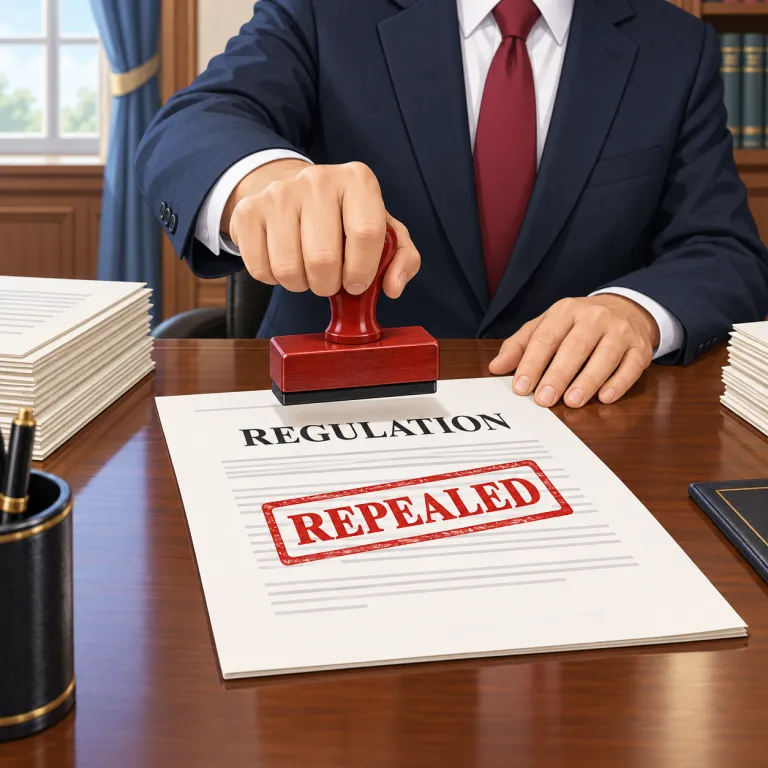
法律や協定などを公式に廃止する、または無効にする。
To abrogate means to officially end, cancel, or remove a law, agreement, or rule. It is mainly used in legal, political, and other formal contexts. The word suggests that something is ended by authority, not simply ignored.
abrogate は日常語ではなく、法律・条約の文脈で覚えると定着しやすい語です。まず repeal(法律を廃止する)や revoke(正式に取り消す)と近い仲間に置き、law / treaty / agreement を公的に無効化するときのかなり硬い動詞だと押さえるとよいです。abolish が制度や慣習まで広く“なくす”のに対し、abrogate は“公式に効力を失わせる”感じ。abrogate a treaty, abrogate the law の形で覚えると実戦で出しやすく、語尾 -ate も「硬い動詞」の目印になります。
Remember `abrogate` as a very formal verb used with laws, treaties, and agreements. It lives near words like `repeal` and `revoke`, so think of official cancellation, not everyday stopping. Phrases like `abrogate a treaty` help fix its legal tone in memory.
The government voted to abrogate the treaty.
政府は条約の破棄を決議しました。
They decided to abrogate the outdated regulations.
彼らは古い規則を廃止することを決めました。
Abrogating that decision freed them from their obligations.
その決定を無効にしたことで、彼らは義務から解放されました。
文脈によって、次の意味でも使われます。
自分が負う責任や義務を認めず、果たすことを拒んだり回避したりすることを表す。abrogate responsibilityのような形で使われ、単なる怠慢よりも責任を正式または一方的に退ける含みがある。
ラテン語 abrogare「正式に取り消す、廃止する」から来た語で、ab-「離して」+ rogare「求める、法案を提出する」から成ります。もとは「その法を取り下げるよう求める」という法律用語的な発想で、そこから一般に「廃止する」の意味になりました。関連語は derogate, interrogate です。
Abrogate comes from Latin abrogare, meaning "to repeal formally" or "cancel." It is made from ab- "away" and rogare "to ask" or "propose a law." The original legal idea was to ask for a law to be taken away, and this became the general sense of officially ending or repealing something. Related words include derogate and interrogate.
この英単語をクイズで覚えよう