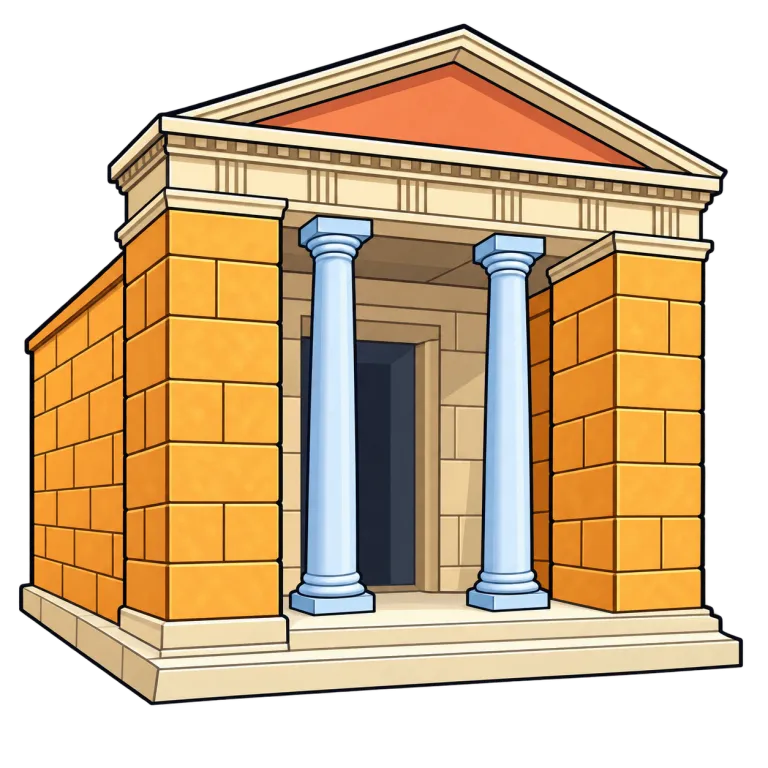
壁柱端部
解説 Definition
古典建築において、壁の端が突き出して柱状になった四角い構造部分を指します。独立した柱ではなく、壁の終端を強調し、構造的・装飾的な役割を持つ部分です。
An anta is a flat, slightly projecting part at the end of a wall in classical architecture. It looks similar to a shallow pillar and is often seen at the front of Greek or Roman buildings. This is a specialized term mainly used when describing temples and other historic structures.
覚え方のコツ Memory Tip
anta は単独で覚えるより、column や pilaster と比べると残りやすい語です。column は独立した柱、pilaster は壁に付いた装飾的な平柱、anta はその中でも「壁の端がそのまま四角く厚くなった部分」に限定されます。古典建築では入口の左右に一対で現れやすく、in antis「アンタの間に柱が立つ」という表現とセットで覚えると位置関係まで思い出せます。
`Anta` is easier to remember by comparing it with `column` and `pilaster`. A column stands free, a pilaster is attached to a wall, and an anta is specifically the thickened end of a wall. It often appears as a pair at an entrance, so linking it with `in antis` can help you remember its position.
例文
In classical architecture, an anta is a square projection at the end of a wall.
古典建築では、アンタは壁の端にある四角い突出部です。
The antae at the ends of the temple walls provide support and decoration.
神殿の壁の端にあるアンタは、構造を支えるとともに装飾の役割も果たします。
Unlike a pilaster attached to a wall, an anta forms the end of the wall itself.
壁に付けられた付け柱とは異なり、アンタは壁そのものの端部を形成します。
anta の類義語・関連語
紛らわしい語
anta の語源・成り立ち Etymology
anta は建築ラテン語 antae「壁端の柱状部」を英語で単数化した語です。はっきりした接頭辞分解はしにくいものの、語の芯には「壁の端に立つ部分」という感覚があり、壁の突き出しがそのまま壁柱端部を指します。antae や in antis が関連語です。
Anta comes from architectural Latin antae, meaning the pillar-like ends or projections of a wall. English later treated it as a singular form, anta. The word has kept its basic architectural sense of "the end part of a wall shaped like a pillar." Related forms include antae and the phrase in antis.
同じレベルの語彙をもっと
外部辞書で調べる
この英単語をクイズで覚えよう