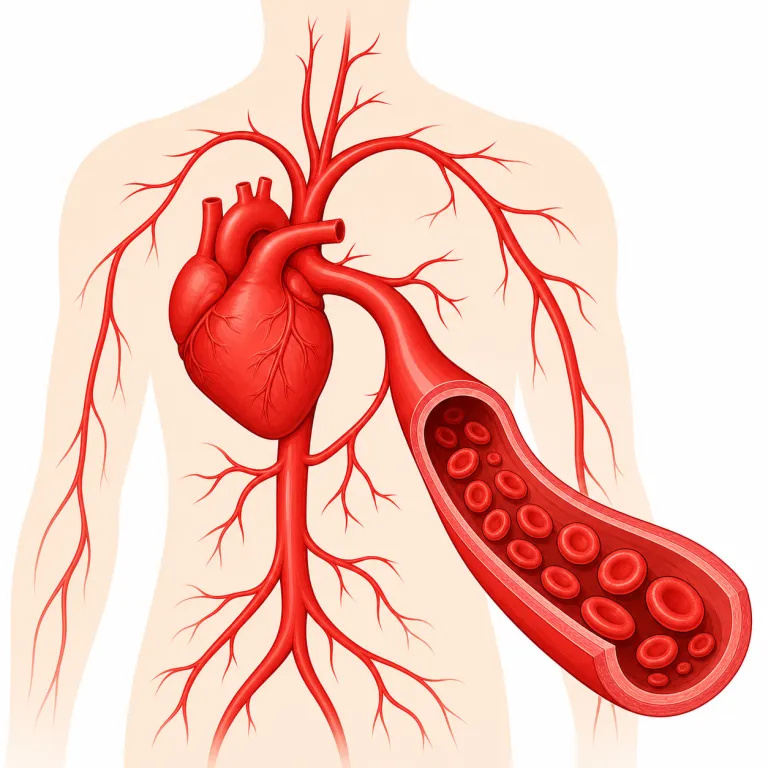
動脈
解説 Definition
血液を心臓から体全体に運ぶ重要な血管。また、交通や通信において中心的な役割を果たす道路や路線。
An artery is a blood vessel that carries blood away from the heart to other parts of the body. It is an important word in medicine and biology when talking about the circulatory system. Arteries are different from veins, which carry blood back to the heart.
覚え方のコツ Memory Tip
artery は artery disease / coronary artery などでまとまりで見ておくと定着しやすい語。まず vein(静脈)と対で覚え、artery は「心臓から外へ送る太い本線」、vein は「心臓へ戻る回収路」と整理すると混同しにくいです。さらに arterial road のように「幹線道路」の比喩でも使われるので、artery には“中心を走る重要ルート”という共通イメージがある、とまとめると覚えやすいです。
Remember `artery` together with `vein` as a pair. An artery is like a main route going out from the heart, while a vein brings blood back. That is why `arterial road` also means an important main road.
例文
An artery carries blood from the heart.
動脈は心臓から血液を運びます。
The surgeon repaired the damaged artery.
外科医は損傷した動脈を修復した。
The highway is a major artery for regional trade.
その高速道路は地域の貿易を支える主要幹線である。
artery の語源・成り立ち Etymology
artery はラテン語 arteria を経てギリシャ語 arteria にさかのぼる語で、古代には気道や太い管を指したとされます。arterial や arteriosclerosis も同根で、「体内で生命を通す主要な通路」という原像を知ると、動脈が単なる血管名ではなく要路として感じられます。
Artery comes through Latin arteria from Greek arteria. In ancient times, the word could mean the windpipe or another large tube in the body, not only a blood vessel. Later its meaning became more specific and settled on the main vessels that carry blood. Related words include arterial and arteriosclerosis.
同じレベルの語彙をもっと
外部辞書で調べる
この英単語をクイズで覚えよう