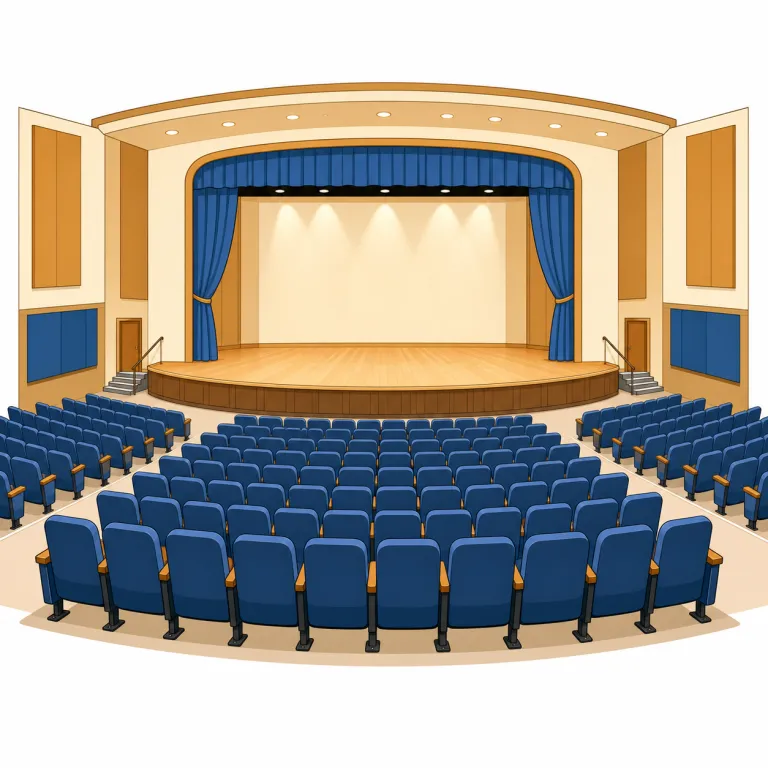
auditorium
auditorium は英検準1級・TOEIC 860・TOEFL 80・IELTS 6.5レベルの英単語で、「講堂」という意味があります。発音記号は /ˌɔːdəˈtɔːriəm/ です。
講堂
解説 Definition
「講堂」とは、大勢の人が集まって講演・コンサート・式典などを行うための大型のホールや室内施設を指します。学校・大学・公共施設によく設置されています。
An auditorium is a large room or hall where people gather to listen to speeches, watch performances, or attend events. It is commonly found in schools, theaters, and conference centers, and usually has many seats.
覚え方のコツ Memory Tip
audio, audience, audible を知っていると覚えやすい語です。aud- が「聞く」系なので、auditorium は「大勢が集まり、話や音楽を聞くための大きな空間」とまとめると定着しやすくなります。語尾の -ium も stadium, aquarium のように「施設・空間名」によく見える形。単なる hall より、講演・式典・コンサート向けの少し正式な会場という感じがあります。school auditorium, in the auditorium の形で見たら、『座って聞く場所』を思い出すと classrom や gymnasium と混同しにくいです。
Connect it with audio, audience, and audible. They all share the idea of hearing, so an auditorium is a place where many people gather to listen. The ending -ium also appears in place words like stadium, which helps the form stick.
例文
The graduation ceremony was held in the school auditorium.
卒業式は学校の講堂で行われた。
The auditorium can seat up to one thousand people.
その講堂は最大千人を収容できる。
The famous pianist performed in the city auditorium last night.
有名なピアニストが昨夜、市の講堂で演奏した。
auditorium の類義語・関連語
類義語
紛らわしい語
auditorium の語源・成り立ち Etymology
「auditorium」はラテン語 audire「聞く」からできた語で、-orium は「場所」を表す語尾。関連語は audience、audible で、中心には「聞くための場」という発想がある。講堂は単なる大部屋ではなく、本来は声や音を受け取るよう設えた空間だと分かる。
"Auditorium" comes from Latin "audire," meaning "to hear," with the ending "-orium," which often shows a place. Its oldest sense was basically "a place for hearing." From that, it came to mean a hall designed for listening to speech, music, or performance. Related English words include "audience" and "audible."
同じレベルの語彙をもっと
英検準1級の一覧へ →外部辞書で調べる
この英単語をクイズで覚えよう