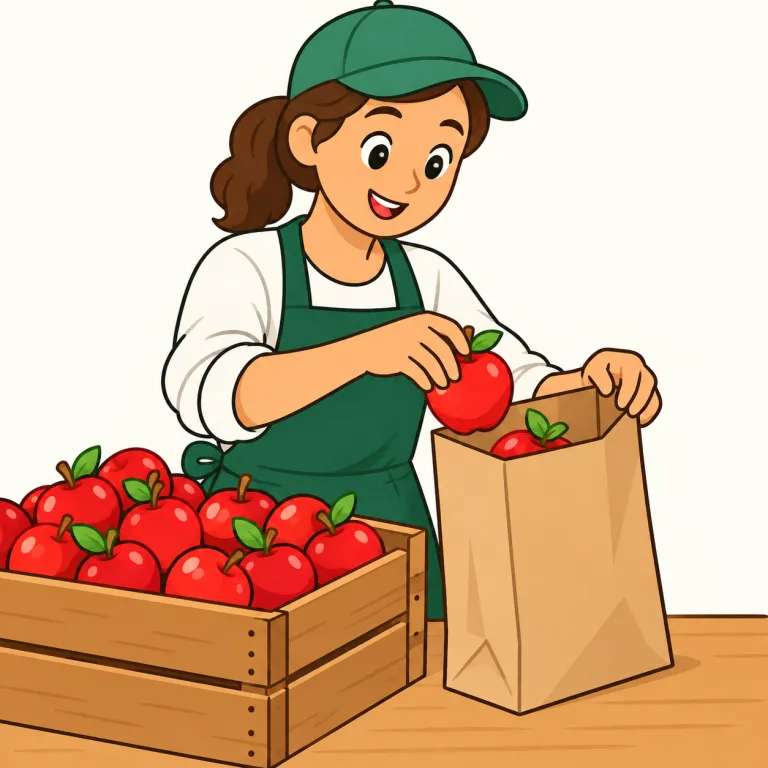
袋詰め
解説 Definition
bagging は bag(袋に入れる、袋詰めする)の現在分詞・動名詞です。品物を袋に詰める作業や、その最中の動作を表します。
Bagging is the present-participle or gerund form of “bag.” In this sense, it means putting goods, food, or other items into bags, or the process of doing so.
覚え方のコツ Memory Tip
原形 bag に -ing を付ける際、短母音+子音で終わるため g を重ねて bagging となります。発音は /ˈbæɡɪŋ/。レジで品物を袋に入れる、収穫物を袋詰めする場面を思い浮かべ、bagging groceries、bagging apples、finish bagging の形で覚えましょう。packing は箱詰めなども含む広い語ですが、bagging は袋に入れることを明示します。
Begin with the verb bag. Because it ends in a single consonant after a short stressed vowel, the final g is doubled before -ing: bag becomes bagging, pronounced /ˈbæɡɪŋ/. Picture a market worker putting apples into bags or a cashier bagging groceries. Useful patterns include bagging vegetables, finish bagging the rice, and a bagging machine. Compare it with packing: packing can involve boxes, cases, or other containers, while bagging specifically tells you that bags are being used. The visible doubled g also appears in related forms such as bagged.
例文
He is bagging apples at the market.
彼は市場でリンゴを袋詰めしています。
Bagging the rice took longer than expected.
米の袋詰めは予想より時間がかかりました。
The workers finished bagging the vegetables before noon.
作業員たちは正午前に野菜の袋詰めを終えました。
bagging の類義語・関連語
類義語
対義語
紛らわしい語
bagging の語源・成り立ち Etymology
古ノルド語の「袋・束」を意味するbaggiに由来し、-ingは動作や過程を表す接尾辞です。物を袋に入れて束ねる作業を示す構成で、「袋詰め」という意味が直感的に理解できます。同語根を持つ関連語に「手荷物」のbaggage、「ぶかぶかの」のbaggyがあります。
Bagging is formed from bag by doubling the final g and adding -ing. The noun bag probably entered Middle English from Old Norse baggi, meaning a bag, pack, or bundle. English later developed the verb bag, “to put into a bag,” directly from the noun. In the present sense, -ing marks an ongoing action or the process itself. Baggage and baggy are historically related formations built around the same familiar noun.
同じレベルの語彙をもっと
外部辞書で調べる
この英単語をクイズで覚えよう