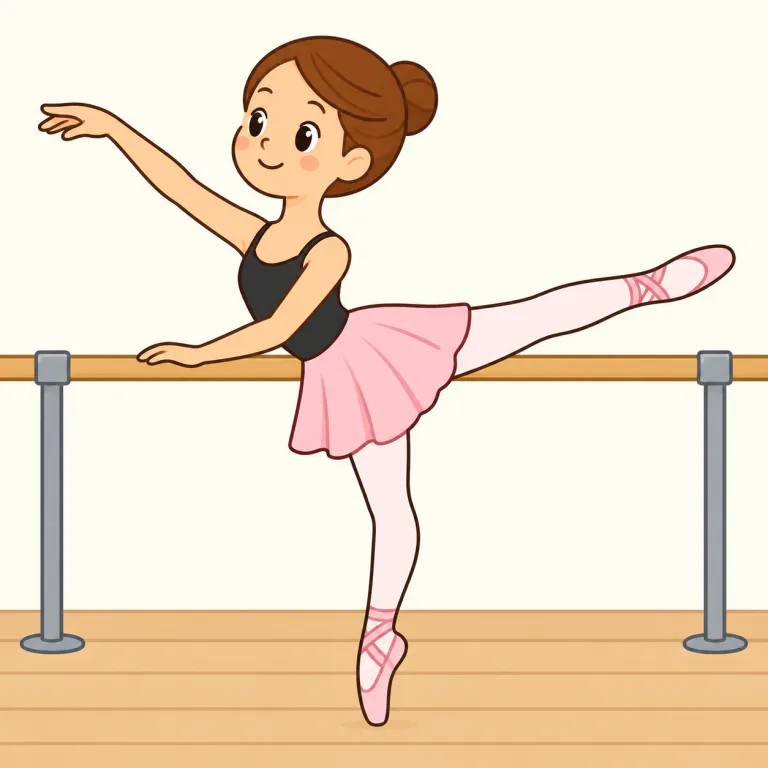
バレエ
解説 Definition
ballet は、音楽に合わせて踊るクラシックな舞台舞踊であるバレエという意味です。日本語の「バレエ」とほぼ同じで、作品や公演、練習する踊りの種類を表します。
A theatrical form of dance using highly controlled, formalized movements, usually performed to music. The word can also refer to a particular work or performance in this dance tradition.
覚え方のコツ Memory Tip
日本語の「バレエ」と同じ舞台舞踊だが、英語では語末のtを発音せず、おおよそ「バレイ」/bæˈleɪ/となる点を覚える。study balletは舞踊を習う、watch a balletは作品・公演を見る、ballet classは教室を指す。踊りの種類と、一つの作品や公演の両方に使える名詞である。
The meaning is close to Japanese バレエ, but remember the English pronunciation /bæˈleɪ/: the final t is silent because the word came through French. Connect it with three useful patterns. Someone studies ballet when learning the dance form, watches a ballet when seeing a particular work or performance, and attends a ballet class for training. Thus, ballet can name the art form in general as well as an individual theatrical work presented with music and formal movement.
例文
She studies ballet every week.
彼女は毎週バレエを習っています。
We watched a ballet in the theater.
私たちは劇場でバレエを見ました。
The ballet class starts at six.
バレエのクラスは6時に始まります。
ballet の類義語・関連語
ballet の語源・成り立ち Etymology
フランス語 ballet から借入。イタリア語 balletto(小さな踊り)の縮小辞で、ballo(踊り)に由来する。さらに遡ると後期ラテン語 ballare(踊る)が語源。ルネサンス期イタリア宮廷で発展しフランスで体系化された。関連語:ball(舞踏会)、ballad(バラード)。
English borrowed ballet from French. The French word came from Italian balletto, a diminutive of ballo, “a dance.” These forms are related to Late Latin ballāre, “to dance.” Ballet developed in the courts of Renaissance Italy and was later elaborated and formally organized in France. Its French route into English helps explain why the final t is not pronounced in standard English.
同じレベルの語彙をもっと
外部辞書で調べる
この英単語をクイズで覚えよう