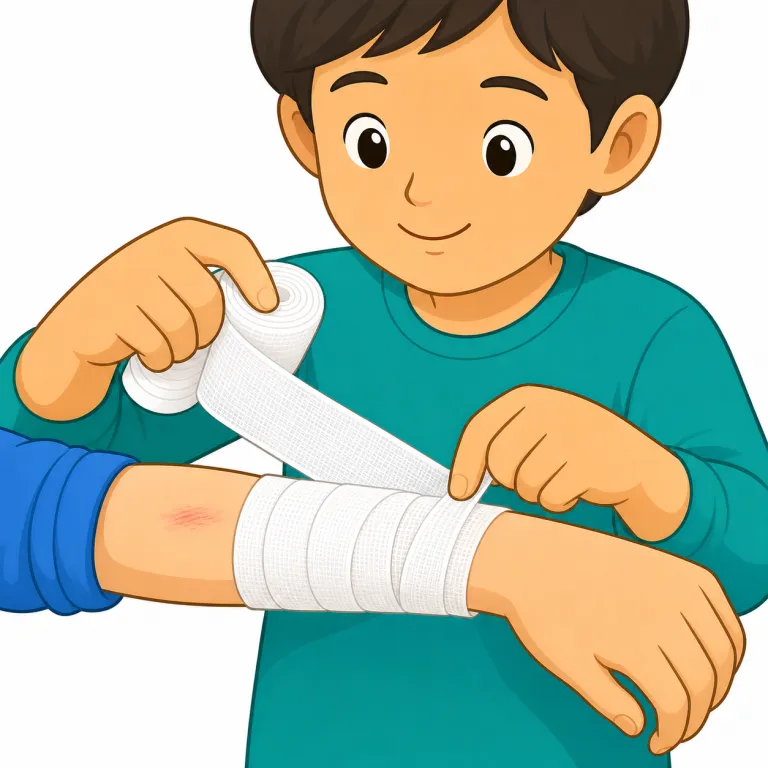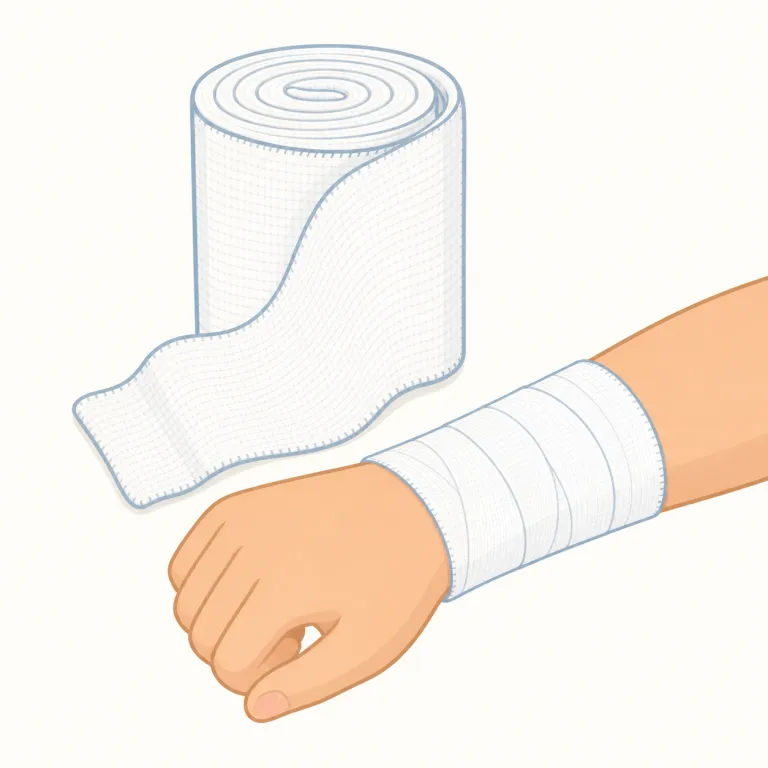
bandage
bandage は英検準1級・英検1級レベルの英単語で、「包帯、包帯を巻く、巻く、絆創膏」という意味があります。発音記号は /ˈbændɪdʒ/ です。
意味一覧 (4件)
包帯
解説 Definition
傷口を覆って保護したり、ガーゼや薬を押さえたりするための布状の医療用品を指す名詞です。腕や脚に巻く長いものから、小さな傷に当てるものまで含み、清潔さや交換が重要な物として扱われます。
A bandage is a piece of cloth or other material used to cover and protect an injury. It is commonly used on cuts, wounds, or sore parts of the body. Some bandages also help stop bleeding or hold medicine in place.
覚え方のコツ Memory Tip
bandage は「細長く巻くもの」としての band のイメージから、傷を守る布を思い浮かべると覚えやすい語です。a clean bandage は清潔な包帯、change the bandage は包帯を交換すること。gauze が素材や当て布寄り、plaster が小型の絆創膏を指すことがあるのに対し、bandage は巻く・当てることで患部を保護する医療用品全般に使えます。
Notice the word `band` at the start. A band is something like a strip or belt, so a `bandage` is easy to picture as a strip wrapped around an injury. It is useful to remember both forms: `a bandage` for the thing, and `bandage a wound` for the action.
例文
The nurse wrapped a bandage around his injured arm.
看護師は彼の怪我した腕に包帯を巻きました。
A sterile bandage should be applied to prevent infection.
感染を防ぐために、無菌の包帯を適用する必要があります。
He removed the old bandage and replaced it with a fresh one.
彼は古い包帯を取り外して、新しいものと交換しました。
包帯を巻く
(意味 2)解説 Definition
傷口やけがをした部位に包帯を当て、ずれないように巻いて固定する動作を表す動詞です。応急処置で患部を覆う場面に使い、治療そのものより保護・止血・固定の手順に焦点があります。
To bandage someone or a part of the body means to cover an injured area with a bandage and wrap it so it stays in place. This verb is often used in first aid when you want to protect a wound, stop bleeding, or support the injured part. The focus is on covering and securing the injury, not on curing it.
覚え方のコツ Memory Tip
名詞の「包帯」から、その包帯を使って処置する動詞へ広がった語です。bandage a cut なら切り傷を覆う、bandage his knee なら膝に包帯を巻く、というように、目的語には傷や体の部位が来ます。単に布で包むのではなく、けがを悪化させないために医療的に巻く動作だと押さえると、cover や wrap との違いも見えやすくなります。
Start with the noun bandage, which means the cloth used on an injury, and extend it to the verb meaning to treat something with that cloth. You bandage a cut or bandage someone's knee, so the object is usually a wound or a body part. Think of it as a medical action to protect or support an injury, not just to cover or wrap something.
例文
The nurse bandaged his hand after cleaning the cut.
看護師は切り傷を洗ったあと、彼の手に包帯を巻いた。
You should bandage the ankle firmly so it does not move too much.
足首が動きすぎないように、しっかり包帯を巻いたほうがいい。
She quickly bandaged the wounded dog's leg before taking it to the vet.
彼女はそのけがをした犬を獣医に連れて行く前に、すぐ脚に包帯を巻いた。
巻く
(意味 3)解説 Definition
包帯で傷や怪我を覆い、保護する。医療行為として傷口の止血や保護に用いられる。
例文
She bandaged the patient's leg carefully.
彼女は患者の脚に注意深く包帯を巻いた。
The doctor bandaged the wound to stop the bleeding.
医者は出血を止めるために傷に包帯を巻いた。
He bandaged his hand after cutting it.
彼は手を切った後に手に包帯を巻いた。
絆創膏
(意味 4)解説 Definition
傷を覆い保護するための粘着性のテープ状医療用品。一般的には小さな傷や切り傷に貼り付けることで衛生的に保つ。定期的に交換することが大切である。
例文
A bandage covered the wound on his arm.
絆創膏が彼の腕の傷をカバーしていた。
She wore a bandage on her ankle after the injury.
彼女は怪我の後に足首に絆創膏をしていた。
The nurse applied a clean bandage to the cut.
看護師は切り傷に清潔な絆創膏を貼った。
bandage の語源・成り立ち Etymology
bandage はフランス語 bandage に由来し、band- は「細長い帯」を表す古フランス語 bande、さらにフランク語系の「結ぶ」にさかのぼる。傷を帯で巻いて結ぶ発想がそのまま包帯なので、band や bind にも同じ締めてまとめる感覚が残る。
Bandage comes from French bandage, based on band, meaning a strip or binding. That goes back through Old French bande to a Germanic source linked with the idea of binding or tying. The word first referred to something used to wrap with a strip of cloth, and then became the usual word for wound wrapping. Band and bind are related in origin.
外部辞書で調べる
この単語を英単語クイズで覚えよう