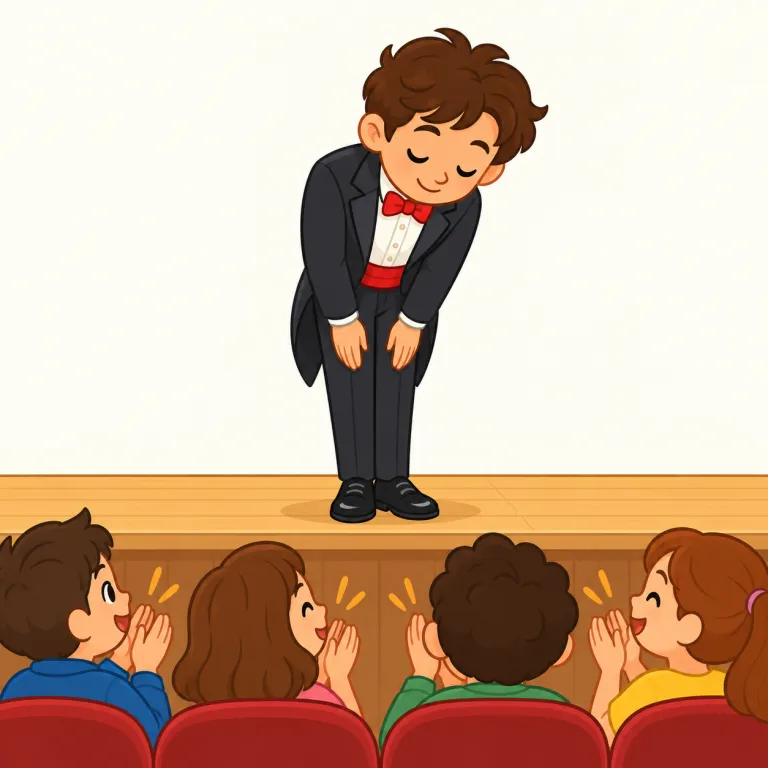
お辞儀をすること、弓奏法
解説 Definition
bowing には、bow /baʊ/「お辞儀をする」の現在分詞・動名詞と、bow /boʊ/「弓で弦楽器を弾く」に由来する名詞「弓使い、弓奏法」があります。
Bowing can be the present participle or gerund of bow /baʊ/, meaning to lower the head or upper body in greeting or respect. Pronounced /ˈboʊɪŋ/, it is also a noun for the action, manner, or technique of playing a stringed instrument with a bow.
覚え方のコツ Memory Tip
bow /baʊ/「お辞儀をする」に -ing を付けると「お辞儀をしている・お辞儀をすること」を表します。一方、/ˈboʊɪŋ/ と発音すると、弦楽器の「弓使い・弓奏法」を表します。発音と文脈で区別しましょう。
Bowing from bow /baʊ/ describes lowering the head or body, as in “is bowing to the audience.” Bowing /ˈboʊɪŋ/ refers to using a bow on a stringed instrument, as in “bowing technique.” Use the pronunciation and context to distinguish the two.
例文
The actor is bowing to the audience.
その俳優は観客にお辞儀をしています。
Bowing is common in many formal greetings.
多くの正式なあいさつでは、お辞儀が一般的です。
The violinist practiced her bowing technique.
そのバイオリン奏者は弓使いの技術を練習しました。
bowing の類義語・関連語
bowing の語源・成り立ち Etymology
どちらの bowing も bow に -ing を付けた形です。お辞儀を表す bow /baʊ/ は古英語 būgan「曲がる」に、弓や弓奏法に関する bow /boʊ/ は古英語 boga「弓」にさかのぼります。
Both uses are formed from bow plus -ing. Bow /baʊ/, meaning “bend or lower the body,” descends from Old English būgan. Musical bow /boʊ/ is related to the noun for the curved implement, from Old English boga; the musical verb and noun bowing developed from that sense.
同じレベルの語彙をもっと
外部辞書で調べる
この英単語をクイズで覚えよう