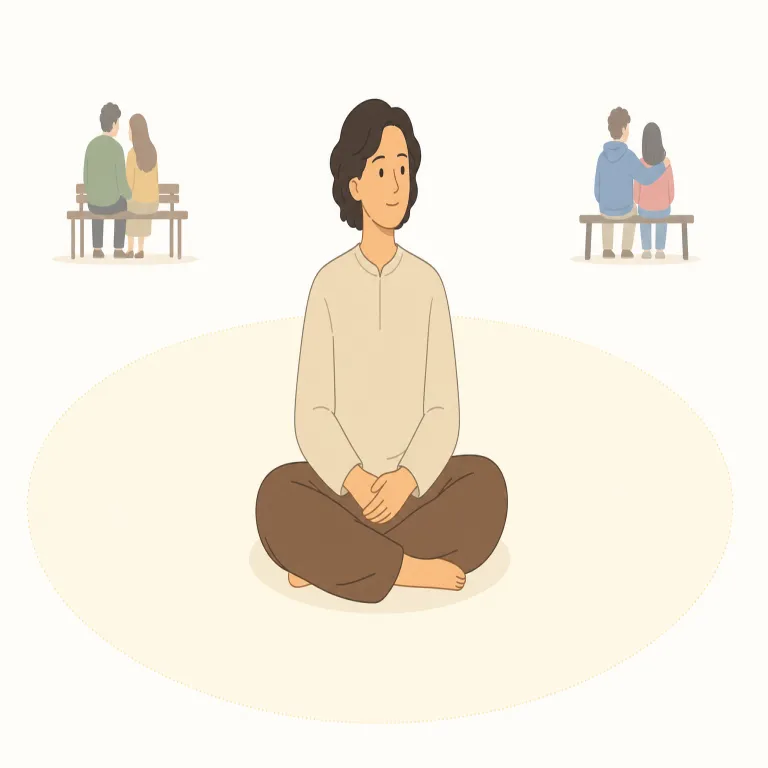
禁欲的な
解説 Definition
結婚や性的関係を持たず、禁欲を守っている状態を表します。特に宗教的な誓いや個人的な信条によって、性的関係を避ける場合によく使われます。
Celibate means not having sexual relations, often because of a personal, religious, or social choice. It can also describe someone who remains unmarried, especially in religious contexts. The word is formal and is mainly used when talking about lifestyle, religion, or moral rules.
覚え方のコツ Memory Tip
まず celibacy(独身・禁欲)とセットで覚えると定着しやすい語。核心は「結婚しない+性的関係を持たない」で、単なる single や unmarried より、宗教的・誓約的でかなり硬い響きがある。a celibate priest, remain celibate のように人や状態を表す形で出やすい。celebrate とつづりが少し似て紛らわしいが、意味は無関係。celibate を見たら celibacy を連想し、「個人的な未婚」ではなく「禁欲を守る」場面の語だと結びつけると残りやすい。
Remember `celibate` with religious or formal life patterns, such as `a celibate priest` or `remain celibate`. It usually suggests an ongoing rule, choice, or vow, not just a temporary situation. This helps separate it from broader words like `chaste`.
例文
Celibate priests take vows to remain unmarried and chaste.
聖職者たちは独身で貞潔でいることを誓う。
She chose a celibate lifestyle devoted to spiritual practice.
彼女は精神的な修行に専念する禁欲的な生活を選んだ。
Members of the religious order lead celibate lives as part of their vows.
その修道会の会員は、誓いに従って禁欲的な生活を送っている。
celibate の類義語・関連語
celibate の語源・成り立ち Etymology
celibate はラテン語 caelebs「未婚の」に由来し、celibacy も同じ語根から来ています。もとは『結婚していない』という状態を指し、そこから宗教的文脈で性的関係を断つ含意が強まりました。だから『禁欲的な』は、結びつきを持たない生き方の延長にある語だと分かります。
Celibate comes from Latin caelebs, meaning "unmarried." At first it referred simply to a person who was not married. In religious use, the idea became narrower and stronger, referring to a life without marriage and therefore without sexual relations. Celibacy comes from the same root.
同じレベルの英単語をもっと
外部辞書で調べる
この単語を英単語クイズで覚えよう