交換子
noun 名詞数学・物理学で、二つの演算子や元がどの程度交換可能かを表す式を指します。線形演算子では通常[A,B]=AB−BAで定義され、量子力学では観測量どうしの関係を記述する際にも使われます。
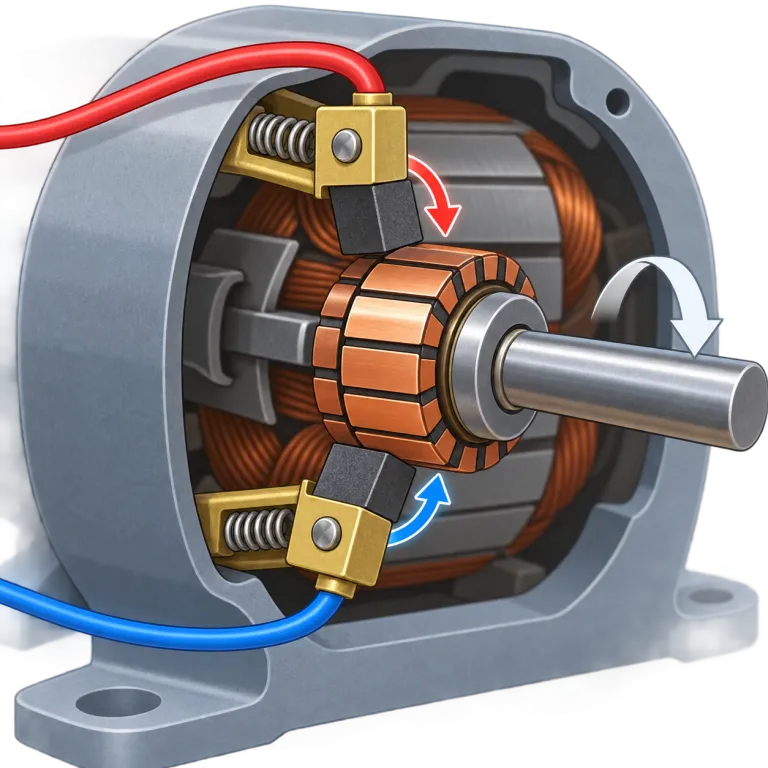
電動機やジェネレータにおいて、電流の方向を交互に切り替えるための電気装置。回転する軸に接触するブラシとセグメントで構成される。
A commutator is a part of an electric motor or generator that helps change the direction of electric current. It allows the machine to keep working properly by connecting moving and fixed parts. This word is mainly used in engineering and physics.
commutator は、まず commute / commutation 系の「切り替える・入れ替える」感覚とつなげると覚えやすいです。語尾の -or は generator, motor などと同じで「その働きをするもの」。つまり『切り替える装置』という理解で入れると、整流子の役割に直結します。電動機ではブラシが触れる部分で電流の向きを次々に切り替える、と使用場面ごと覚えるのが有効です。conductor のような「流すもの」と混同せず、『流す』でなく『切り替える』部品だと区別すると定着します。
Focus on the idea of switching: the root connects with `commutation`, which is about change or interchange. The ending `-or` means a thing that does a job, like in `motor` or `generator`. So a `commutator` is best remembered as a part that switches direction, not one that simply carries current like a conductor.
The commutator in the motor switches the current direction.
モーター内の整流子は電流の方向を切り替える。
A damaged commutator can cause motor failure.
傷んだ整流子はモーター故障を引き起こす可能性がある。
The commutator consists of copper segments that work with carbon brushes.
整流子は、炭素ブラシと接触して働く銅セグメントで構成されている。
文脈によって、次の意味でも使われます。
数学・物理学で、二つの演算子や元がどの程度交換可能かを表す式を指します。線形演算子では通常[A,B]=AB−BAで定義され、量子力学では観測量どうしの関係を記述する際にも使われます。
commutator はラテン語 commutare「すっかり変える、入れ替える」から来た語で、com-「共に・完全に」+ mutare「変える」に分けられます。commute や mutable も同根です。電流の向きや接続を切り替える部品なので、「切り替えるもの」から整流子という意味になりました。
Commutator comes from Latin commutare, meaning "to change completely" or "switch," from com- and mutare, "to change." It is closely related to English words like commute and mutable. The basic idea is something that changes over or switches, which led to its technical use for a part that reverses or redirects connections or current.
この英単語をクイズで覚えよう