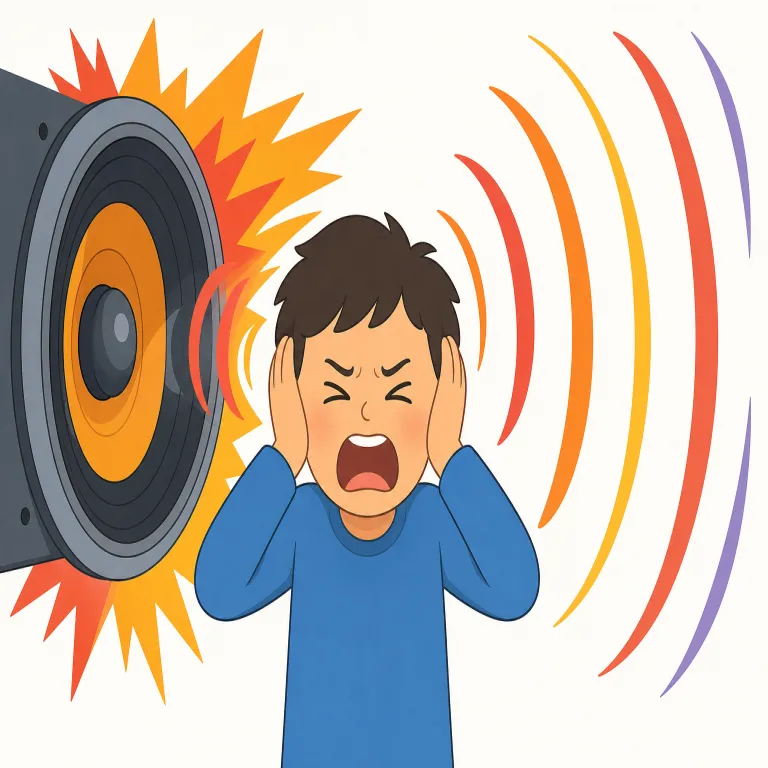
耳がつんざくような
解説 Definition
「耳がつんざくような」とは、非常に大きく、耳を痛めるほどの音の大きさを表します。爆発音や大声など、聴覚を圧倒する程度の音量を指す形容詞です。比喩的には、非常に強烈で目立つ、衝撃的な状態を表現する際にも使用されます。
If a sound is deafening, it is extremely loud and almost painful to hear. It is often used for noise from explosions, machines, music, or large crowds. The word can also be used in a slightly dramatic way to emphasize how strong the sound feels.
覚え方のコツ Memory Tip
deaf を知っていれば取りやすい語。deafening は「聞こえなくなるほど」の音で、ただの loud よりかなり強く、爆発・歓声・サイレンのように“思わず耳をふさぐ場面”と結びつけると定着しやすい。deafening noise / roar / applause の形でよく出る。さらに比喩では deafening silence という有名表現もあり、「無音なのに圧が痛いほど大きい」という逆説ごと覚えると忘れにくい。
Start with the base word `deaf`. `Deafening` describes sound so strong that it feels like you cannot hear anything else after it. Remember common pairs like `deafening noise`, `deafening roar`, and the famous contrast `deafening silence`.
例文
The deafening sound of the explosion echoed through the valley.
爆発の耳がつんざくような音が谷間に響き渡った。
The deafening roar of the crowd showed their support.
群衆の耳をつんざくような大歓声が、彼らの支持を示していた。
The deafening silence after the speech was somehow more powerful.
スピーチ後の痛いほどの沈黙は、なぜかいっそう強烈だった。
deafening の類義語・関連語
deafening の語源・成り立ち Etymology
deafening は古英語 dēaf 由来の deaf「耳が聞こえない」に、動詞化する -en と形容詞化の -ing が付いた形。直訳すると「耳を聞こえなくするほどの」で、「耳がつんざくような」がそのまま見える。関連語は deafen、deafness。
Deafening comes from English deaf, from Old English dēaf, with the verb-forming suffix -en and the adjective ending -ing. It first meant something like "making deaf." From that idea, it came to describe a noise so loud that it seems to shut out hearing. Related words include deafen and deafness.
同じレベルの語彙をもっと
外部辞書で調べる
この英単語をクイズで覚えよう