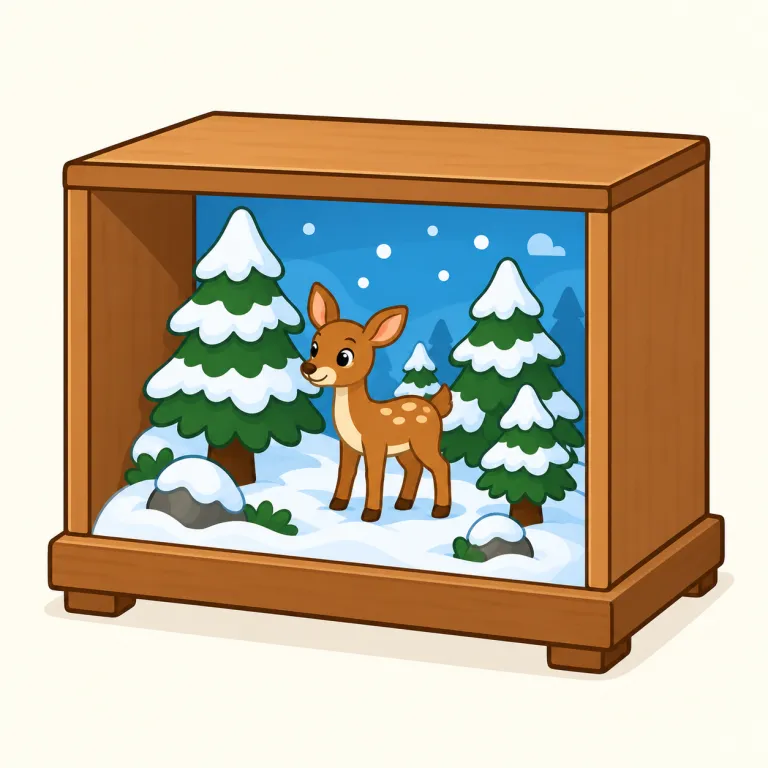
ジオラマ
解説 Definition
diorama は、場面や風景を立体的に小さく再現した模型、ジオラマという意味です。日本語の「ジオラマ」とほぼ同じですが、英語では博物館の展示模型や学校の工作作品にも広く使われます。
A diorama is a three-dimensional model or display that represents a scene, often in miniature and with figures placed against a painted or constructed background. Dioramas are common in museums, exhibitions, and school projects.
覚え方のコツ Memory Tip
diorama は日本語の「ジオラマ」とほぼ同じで、博物館の自然展示や授業の工作など、場面を立体的に再現した模型を指します。ギリシャ語系の dia-「通して」と horama「眺め」を手掛かりに、箱の中をのぞくと森や町の一場面が見える、と覚えましょう。panorama「全景」とのつながりも有効です。
The Japanese loanword ジオラマ and the English “diorama” refer to essentially the same kind of display. Picture looking into a box and seeing a complete miniature scene: a winter forest, an old town, or a historic battlefield. The Greek elements behind the word are associated with seeing through or viewing a scene, which suits this mental picture. Connect it with “panorama,” another word ending in “-orama” and concerned with a view, but keep the distinction clear: a panorama presents a broad view, while a diorama constructs a three-dimensional scene.
例文
The museum displayed a diorama of a forest in winter.
その博物館は冬の森を再現したジオラマを展示していました。
She made a diorama of an old town for her history class.
彼女は歴史の授業のために古い町のジオラマを作りました。
The diorama helped visitors understand how the battle site looked.
そのジオラマは、来館者が戦場の様子を理解する助けになりました。
diorama の類義語・関連語
類義語
紛らわしい語
diorama の語源・成り立ち Etymology
ギリシャ語 dia-「通して」+ horama「眺め」(horan「見る」より)が語源。1820年代にフランスの画家ダゲールが発明した透過光を使う立体展示装置の名称。関連語: panorama(全景)、cosmorama。「光を通して見る」装置が語源で、現在はミニチュア模型の意味で広く使われる。
“Diorama” was formed from Greek-derived elements: “dia-,” meaning through, and “horama,” meaning a sight or view, from a verb meaning to see. The term was introduced in the 1820s for an exhibition devised by Louis Daguerre and Charles-Marie Bouton, in which lighting effects transformed large painted scenes. Its meaning later broadened to the three-dimensional miniature or museum display familiar today. “Panorama” shares the Greek element referring to a view.
同じレベルの語彙をもっと
外部辞書で調べる
この英単語をクイズで覚えよう