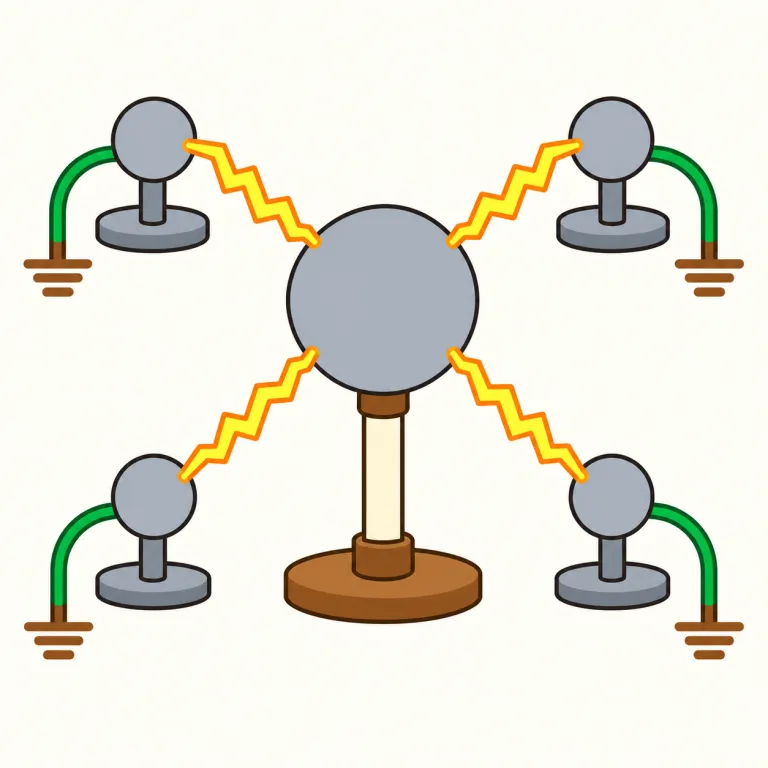
放電
解説 Definition
discharges は discharge(放電)の複数形です。電気がたまった場所から外へ流れ出る現象を指し、科学や技術の文脈でよく使われます。
Separate instances in which stored electrical energy is released and current flows from a charged object or system. The plural often refers to repeated sparks, static-electricity events, or other releases recorded or observed in scientific and technical settings.
覚え方のコツ Memory Tip
単数形 discharge「放電」に複数語尾 -s が付いた形です。名詞 discharge は第1音節に強勢があり、語末 /dʒ/ の後の複数語尾は /ɪz/ になるため、/ˈdɪstʃɑːrdʒɪz/ と発音します。charge が電荷をためること、discharge がそれを外へ解き放つこと、と対にし、static discharges や electric discharges で覚えましょう。
Discharges is the plural of discharge in the electrical sense. Think of charge as electrical energy being stored and the prefix dis- as its removal or release. Because discharge ends in the sibilant sound /dʒ/, the plural ending is pronounced /ɪz/, adding a full syllable: discharges. Use the plural when several separate releases occur, as in electric discharges or static discharges. A useful mental picture is a series of small sparks leaving a charged surface, each spark counting as one discharge.
例文
Small discharges can damage the device.
小さな放電でもその装置を傷めることがあります。
The lab recorded several electric discharges.
研究室はいくつかの放電を記録しました。
Static discharges are common in dry rooms.
乾燥した部屋では静電気の放電がよく起こります。
discharges の類義語・関連語
discharges の語源・成り立ち Etymology
dis-(除去・逆)とcharge(荷を積む)から成り、ラテン語carricareが語源。元来「荷を下ろす・負担を解く」意から、蓄えた電気を開放する「放電」へ意味が転じた。関連語にcharge(充電)やovercharge(過負荷)がある。
Discharge combines dis-, expressing removal or reversal, with charge. Charge came through French from a Late Latin verb related to carrus, “cart,” and originally concerned loading or imposing a burden. Discharge therefore meant unloading or releasing a burden. The electrical sense developed from the same image: accumulated charge is released from a body, battery, or circuit. Discharges is simply the regular plural noun form.
同じレベルの語彙をもっと
外部辞書で調べる
この英単語をクイズで覚えよう