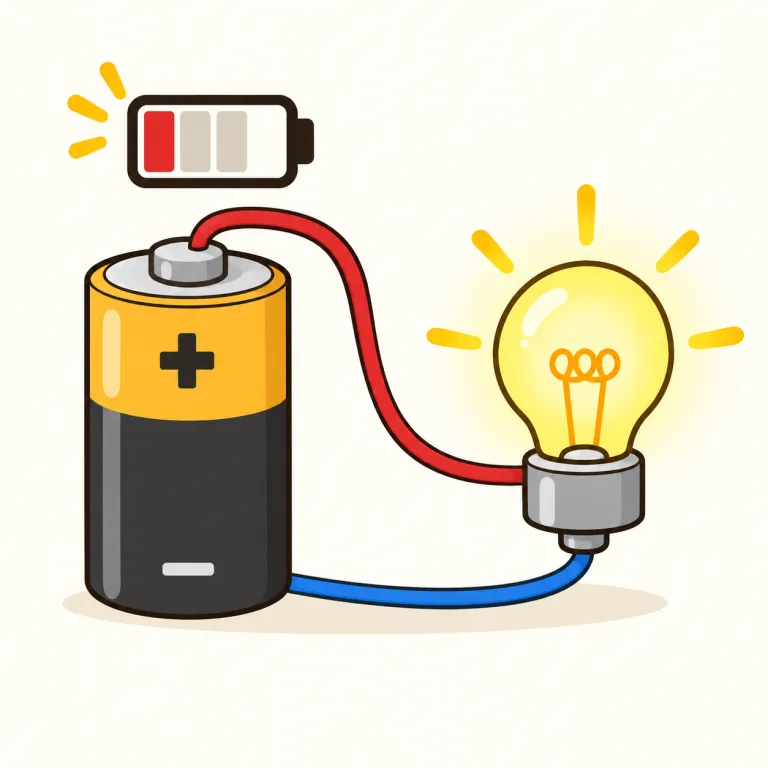
放電中
解説 Definition
discharging は discharge の現在分詞・動名詞です。ここでは、電池や電気機器が蓄えた電気エネルギーを放出し、回路へ電流を供給することを表します。
Discharging describes a battery, cell, or electrical device releasing stored electrical energy while supplying current to a circuit. It is the present participle and gerund of discharge and, in this sense, contrasts with charging.
使い方 Usage
使い分け Common distinctions
- charging は電池にエネルギーを蓄える「充電」、discharging は蓄えたエネルギーを外へ出す「放電」です。 Charging stores energy in a battery; discharging releases stored energy from it.
覚え方のコツ Memory Tip
discharge の語末の無音 e を落として -ing を付けます。末尾の /dʒ/ に /ɪŋ/ が続く形です。電池に蓄えたエネルギーが外へ出ていく様子で覚えましょう。
Drop the final silent e of discharge and add -ing; /ɪŋ/ follows the final /dʒ/. Picture stored energy flowing out of a battery into a device.
例文
The battery is discharging slowly.
その電池はゆっくり放電しています。
The engineer checked whether the backup battery was discharging too quickly.
技術者は、バックアップ電池の放電が速すぎないか確認しました。
discharging の類義語・関連語
discharging の語源・成り立ち Etymology
discharging は discharge の進行形で、古フランス語由来の語です。dis-「離して」と charge「荷を積む」が合わさり、元は「荷を下ろす」なので、そこから「放つ」「電気を外へ出す=放電する」へ広がりました。関連語は charge, cargo。
Discharging is formed from discharge by dropping the final silent e and adding -ing. Discharge entered English through Old French and combines dis-, conveying removal or separation, with charge, originally associated with a load or burden. The literal idea of unloading developed into several kinds of release, including the release of stored electricity from a battery. Charge ultimately belongs to the same historical word family as cargo, though their modern uses differ.
同じレベルの語彙をもっと
外部辞書で調べる
この英単語をクイズで覚えよう