廃嫡
解説 Definition
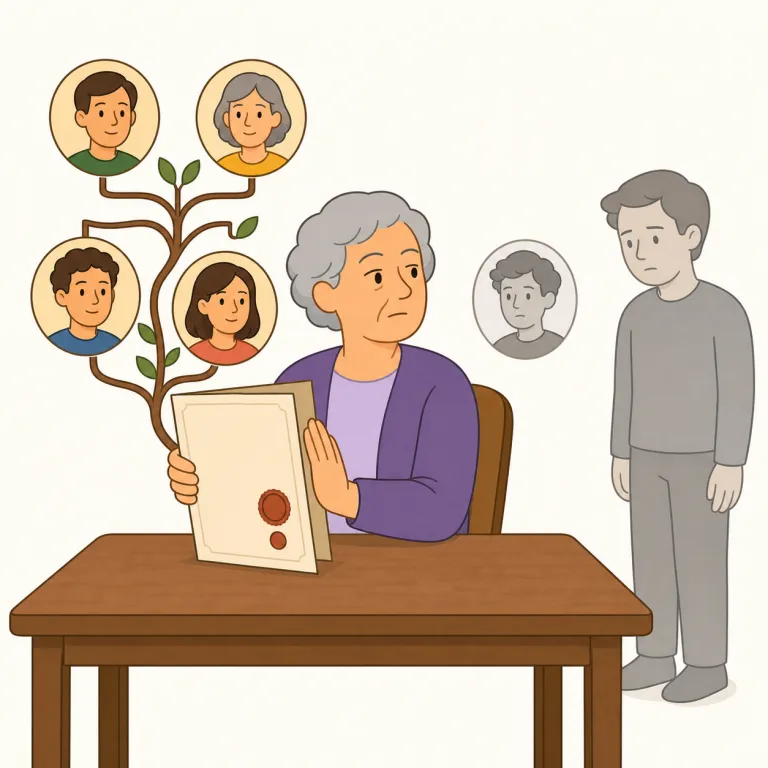
遺言により子孫や相続人の遺産相続権を奪う。法律上の権利として相続対象から除外する行為。
To disinherit someone means to legally prevent them from receiving your money or property after you die. It is usually used in family and legal contexts, especially when talking about wills. This is a formal word with a strong negative meaning.
覚え方のコツ Memory Tip
`inherit`「受け継ぐ」が分かれば、`disinherit` は先頭の `dis-` によって「継承の線から外す」と捉えると覚えやすいです。単に財産をあげないというより、遺言などで相続人としての立場そのものを外す重い語。`inherit property` に対して、`disinherit a son / an heir` のように人を目的語に取りやすい点も記憶のフックになります。`exclude` より法律・家族相続の文脈が強い語です。
Build it from `inherit` with the prefix `dis-`, which often gives a negative or opposite idea. So `disinherit` means taking someone out of inheritance. Connect it with words like `will`, `heir`, and `estate` to keep the legal family context clear.
例文
The father decided to disinherit his rebellious son.
その父親は反抗的な息子を廃嫡することにした。
She was threatened with disinheritance if she married against her parents' wishes.
彼女は両親の意に反して結婚したら廃嫡されると脅された。
The will stated that the eldest son would not be disinherited.
その遺言では長男を廃嫡しないとしていた。
disinherit の類義語・関連語
disinherit の語源・成り立ち Etymology
disinherit は dis-「外す・否定する」+ inherit から成り、核の inherit はラテン語 heres「相続人」にさかのぼります。つまり「相続人の位置から外す」が原義で、財産を与えないだけでなく家の継承線から切り離す感覚が見えます。関連語は heir, hereditary。
"Disinherit" combines the prefix "dis-," meaning removal or reversal, with "inherit." The core of "inherit" goes back to Latin "heres," meaning "heir." So the original idea is to remove someone from the position of heir, which later became the legal sense of refusing them an inheritance; related words include "heir" and "hereditary."
同じレベルの語彙をもっと
外部辞書で調べる
この英単語をクイズで覚えよう