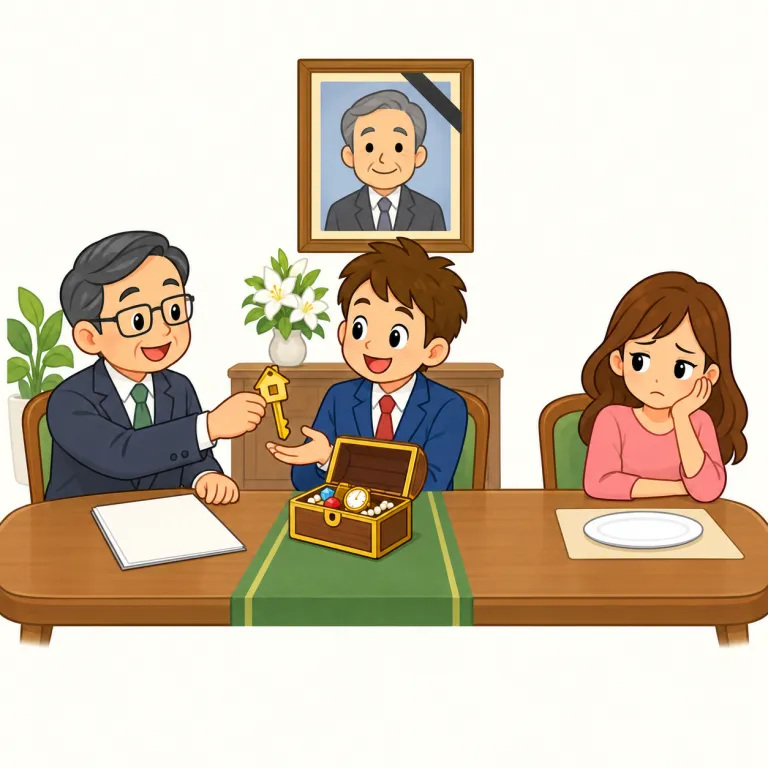
廃嫡された
解説 Definition
相続権を剥奪された状態を表します。親や家族の遺言などによって、財産を受け継ぐ立場から外されたことを指します。
Disinherited means officially prevented from receiving money, property, or other inheritance from a family member after that person dies. It is mainly used in legal and family contexts. The word usually suggests a formal decision in a will or similar document.
覚え方のコツ Memory Tip
disinherited は dis-「外す」+ inherit「相続する」+ -ed「その状態の」と分け、「相続の列から外された」と覚えると定着しやすい形容詞です。家族の遺言書に並ぶ相続人の名前から一人だけ線を引かれた場面を固定しましょう。be disinherited by one’s father「父に相続権を奪われる」、a disinherited son、a disinherited heir のように使います。left out of the will「遺言から外された」と言い換えると意味を確認できます。単に遺産が少なかったのではなく、受け継ぐ立場・権利を剥奪された状態だと押さえるのが要点です。
Build it from `inherit`, then add `dis-`, which often reverses a meaning, like in `disapprove`. So `disinherit` means remove someone from inheritance, and `disinherited` is the result. Keep it near words like `will`, `estate`, and `heir` so you remember it is about property and legal family rights, not just a bad relationship.
例文
The disinherited son struggled to rebuild his life without the family fortune.
廃嫡された息子は、家族の財産なしに人生を立て直すのに苦労した。
The disinherited daughter was left out of her father's will entirely.
廃嫡された娘は、父親の遺言から完全に外されていた。
The disinherited heir challenged the will in court, claiming undue influence.
廃嫡された相続人は、不当な影響力があったと主張して遺言を法廷で争った。
disinherited の類義語・関連語
類義語
派生語
disinherited の語源・成り立ち Etymology
disinherit の過去分詞形で、ラテン系接頭辞 dis-「離して」+ inherit「相続させる」から成ります。inherit は後期ラテン語 inhereditare、さらに heres「相続人」にさかのぼります。heir や heredity と同根なので、「相続の輪から外された」が語形どおりです。
Disinherited is the past participle of disinherit, built from dis- and inherit. Inherit comes through Late Latin from a root related to heres, meaning "heir." The word means being removed from inheritance, and that history is also seen in related English words like heir and heredity.
同じレベルの語彙をもっと
外部辞書で調べる
この英単語をクイズで覚えよう